How to Price Car Detailing: Packages, Vehicle Size, Condition Fees and Add-Ons (Plus Free Forms)
How much to charge for car detailing: target hourly rate, interior vs exterior vs full detail packages, pricing by vehicle size and condition, pet hair and stain fees, paint correction and ceramic coating, mobile travel fees, maintenance plans and deposits, with a worked quote example and free printable forms.
Why car detailing pricing goes wrong
New detailers often copy a competitor's price list or quote one flat number for every car. Then a minivan shows up full of dog hair, sand and spilled juice, the job takes twice as long as planned, and the "full detail" pays less than minimum wage. A repeatable pricing method fixes that: know what an hour of your time has to earn, build clear packages, adjust for vehicle size and condition, price extras separately and protect your schedule with deposits and policies.
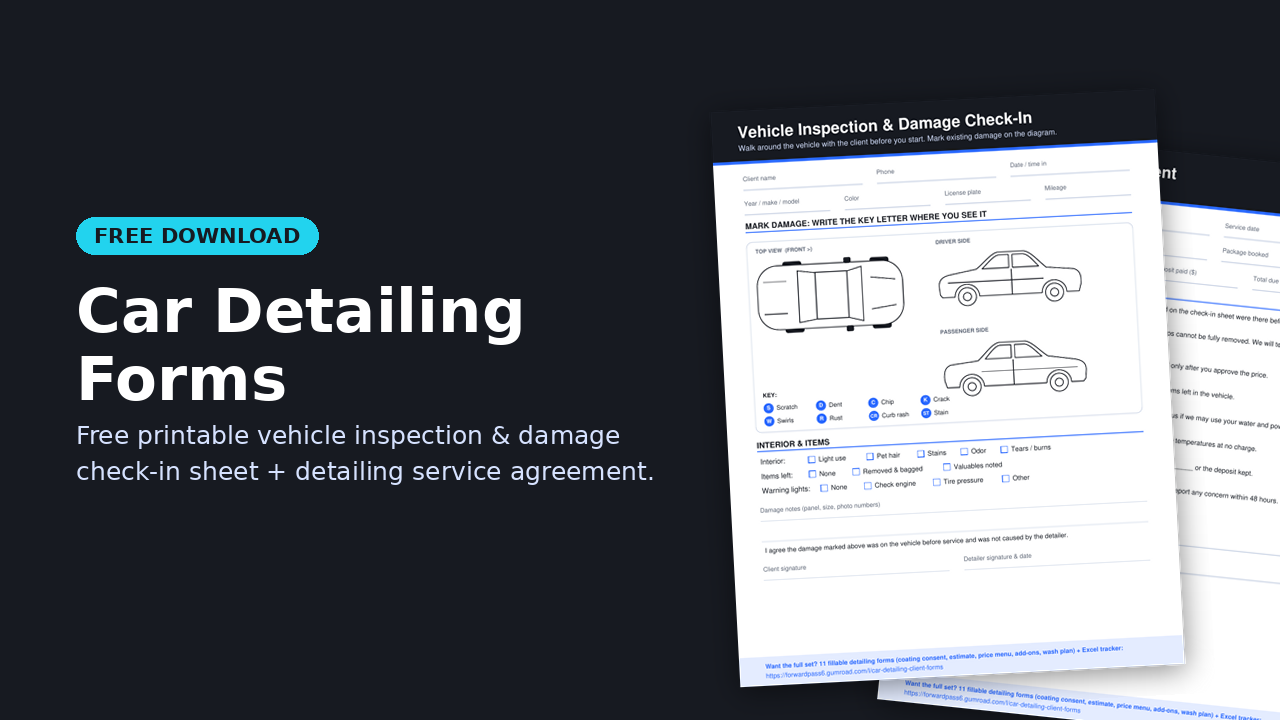
Free Car Detailing Forms
A printable vehicle inspection & damage check-in sheet with car diagrams plus a simple detailing service agreement.
Download free →1. Know your costs and target hourly rate
Every package price is an hourly rate in disguise. Add up what the business costs to run: your pay, any helper wages, chemicals, towels and pads, equipment like extractors, polishers and pressure washers, water and power (or a tank and generator if mobile), vehicle and fuel, insurance, booking software, marketing and taxes. Count unpaid time too, like driving, setup, cleanup and answering messages. Divide by the hours you can realistically bill and you have the number every quote must clear.
2. Build clear packages: interior, exterior and full detail
- Exterior detail: hand wash, wheels and tires, door jambs, decontamination, dry and a spray sealant or wax.
- Interior detail: vacuum, wipe-down of all surfaces, vents and crevices, glass, door panels, mats, and a light shampoo or leather clean.
- Full detail: interior plus exterior, usually priced a little below the two separately so it feels like the better deal.
- Maintenance wash: a quicker, lower-priced service for cars you already detailed, which keeps clients coming back.
Write down exactly what each package includes. Clear scope is what lets you charge confidently and say no to free extras.
3. Price by vehicle size
A two-seat coupe and a three-row SUV are not the same job. Most detailers use size tiers, for example sedan or coupe, small SUV or crossover, and large SUV, minivan or truck, with each tier adding a set amount or percentage to the base package. Time a few jobs in each tier so your tier adjustments come from real data, not guesses.
4. Adjust for condition: pet hair, stains, sand and odors
Condition changes the job more than anything else. Inspect the vehicle before you quote, ideally with photos, and add fees for:
- Pet hair: often a tiered fee by severity, since removal is slow, detailed work
- Heavy stains and spills that need extraction or repeat shampooing
- Sand, mud and heavy debris
- Odors and smoke that need ozone or enzyme treatment
- Biohazards like mold, vomit or bodily fluids, which many detailers price separately or decline
Record existing damage and condition on an inspection sheet when the car arrives, so there is no dispute later about scratches, dents or stains that were already there.
5. Price add-on services separately
Keep packages focused and list extras on a menu:
- Engine bay cleaning
- Headlight restoration
- Clay bar and iron decontamination (if not already in the package)
- Seat and carpet shampoo or steam extraction
- Leather cleaning and conditioning
- Trim restoration
- Water spot removal
- Odor removal treatment
Price add-ons by the time they take at your target rate, plus product cost.
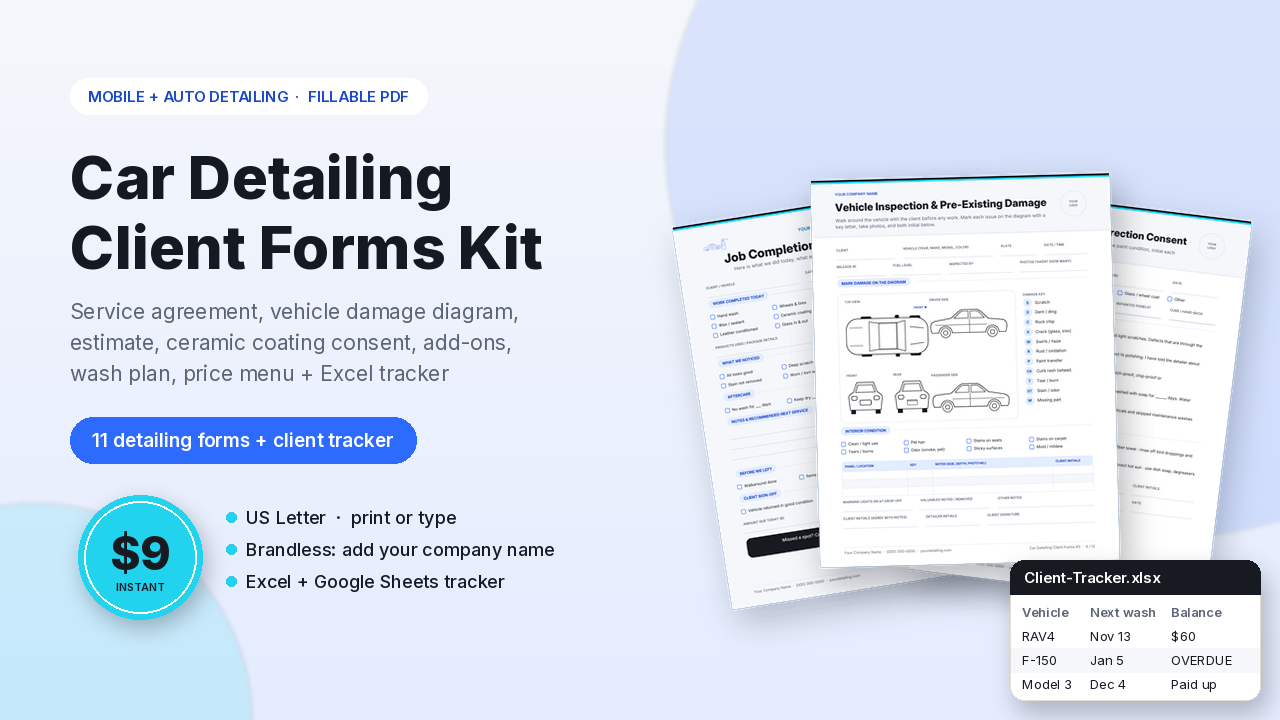
Car Detailing Client Forms Kit
11 fillable forms (client & vehicle profile, service agreement, vehicle inspection with damage diagram, package price menu, estimate, ceramic coating & paint correction consent, job completion report and more) plus an Excel client tracker.
Get it →6. Paint correction and ceramic coating
Paint correction and coatings are high-skill, high-time services, so they are usually quoted individually rather than from a fixed menu. Price them by the stage of correction (for example a one-step polish versus multi-step correction), vehicle size, paint condition and the coating product and warranty you offer. Measure and photograph the paint first, explain realistic results, and get written consent and aftercare acknowledgment, since coatings have cure times and care rules the client must follow.
7. Mobile detailing: travel fees and setup
If you go to the client, your price must cover drive time, fuel and setup. Common approaches are a free service radius with a travel fee beyond it, a flat mobile fee per job, or slightly higher base prices than a shop. Note in your agreement what you need on site, such as access to water and power, a shaded or covered space, and permission from building or HOA management where required.
8. Maintenance plans, deposits and policies
Recurring clients make your schedule predictable. Offer a maintenance plan, such as a weekly, biweekly or monthly wash at a set price, available only to cars that have had a full detail first so they start clean. For new clients and bigger jobs, take a deposit at booking and state your cancellation, late arrival and no-show policy. Explain that final prices can change if the vehicle's condition differs from what was described, and put all of it in a written service agreement.
9. Worked example (example numbers only)
Here is how a full detail quote comes together. The rates below are example numbers to show the math, not recommended prices for your market:
- Mid-size SUV, full detail, estimated 4 hours for one person
- Example target rate $50 per hour, so 4 hours = $200
- Example product and supply cost = $15
- Moderate pet hair in the cargo area and rear seats, example fee = $40
- Mobile job 15 miles away, example travel fee = $15
- Example quote: $200 + $15 + $40 + $15 = $270, with an example $50 deposit at booking
- Add-on offered separately: headlight restoration, estimated 45 minutes at $50/hour plus $5 product = about $43
Swap in your own costs, times and local rates. The point is that every number comes from your time estimate and target rate, not a guess.
10. Put it in writing
A written estimate, inspection sheet and service agreement protect both you and the client. Include the vehicle details, package and add-ons, price and deposit, the condition fees that may apply, pre-existing damage noted at check-in, what you need on site for mobile jobs, payment terms, cancellation and no-show policy, and aftercare for coatings. Hand over a short completion report so the client sees what was done.
Common pricing mistakes
- Quoting without knowing your target hourly rate
- One price for every vehicle size
- Doing pet hair and stain removal for free
- Quoting paint correction from a menu without inspecting the paint
- No travel fee or radius for mobile work
- No deposit, no-show policy or check-in inspection
- Never raising prices when product and fuel costs go up
FAQ
How do you price a car detail?
Work out the hourly rate you need to cover pay, products, equipment, insurance and taxes, estimate how long the package takes for that vehicle size, then add product cost, condition fees like pet hair or heavy stains, add-ons and any mobile travel fee.
Should car detailing be priced by vehicle size?
Yes, most detailers use size tiers such as sedan, small SUV and large SUV, minivan or truck, because larger vehicles take noticeably longer to clean inside and out.
How much extra should I charge for pet hair?
Many detailers use a tiered pet hair fee based on severity, since removal is slow, detailed work. Base it on the extra time it takes you at your target hourly rate, and state it on your price menu so clients are not surprised.
How do you price ceramic coating and paint correction?
Quote them individually after inspecting the paint. Price by correction stage, vehicle size, paint condition, the coating product and its warranty, and the hours involved, then get written consent and aftercare acknowledgment.
Should mobile detailers charge a travel fee?
Usually. Common options are a free service radius with a fee beyond it, a flat mobile fee per job, or slightly higher base prices to cover drive time, fuel and setup.
Do I need a contract for car detailing clients?
A written service agreement and check-in inspection are strongly recommended. They set the scope, price, deposit, condition fees, pre-existing damage and cancellation terms, and prevent disputes.
This page is general guidance, not legal, tax or insurance advice. Business licensing, water runoff and environmental rules, insurance and contract rules vary by state and city and change over time, so check yours before you take jobs.
Related templates
Free Car Detailing Forms
A printable vehicle inspection & damage check-in sheet with car diagrams plus a simple detailing service agreement.
Download free →Car Detailing Client Forms Kit
Fillable auto detailing forms plus an Excel client tracker with balances and next-service dates.
Get it →More free guides
- Car Detailing Gift Certificate
- Car Detailing Client Questionnaire
- Car Detailing Checklist
- Winter Car Detailing Pricing
- Car Detailing Service Agreement and Vehicle Inspection Form (Free Template)
- How to Price Pressure Washing Jobs
- How to Price Lawn Mowing and Lawn Care
- How to Price House Cleaning
- How to Price Junk Removal Jobs