Winter Car Detailing Pricing: How to Quote Salt Removal, Interior Slush Cleanup and Winter Protection (Plus Free Forms)
How car detailers can price winter work: keep base packages, add salt and slush add-ons, charge condition fees, sell winter protection, set cold-weather rules, and fill the slow season with gift cards and maintenance plans, with a worked example and free forms.
Why winter detailing needs its own price list
Winter changes the job. Road salt, sand and slush cover the lower panels, wheels and undercarriage, and every time the driver gets in, more of it ends up on the carpet and mats. Salt leaves white stains that need extraction, not just vacuuming, and wet floor mats can hide damp carpet underneath. Outside, cold weather slows drying, can freeze water on paint and glass, and limits which products you can apply. A winter detail usually takes longer than the same package in summer.
Detailers who lose money in winter usually do the same thing: they quote their summer menu, find a car full of salt and slush, and spend an extra hour or two for free. A short winter add-on list, a condition fee written into the estimate and clear cold-weather rules fix most of that before you pick up a towel.
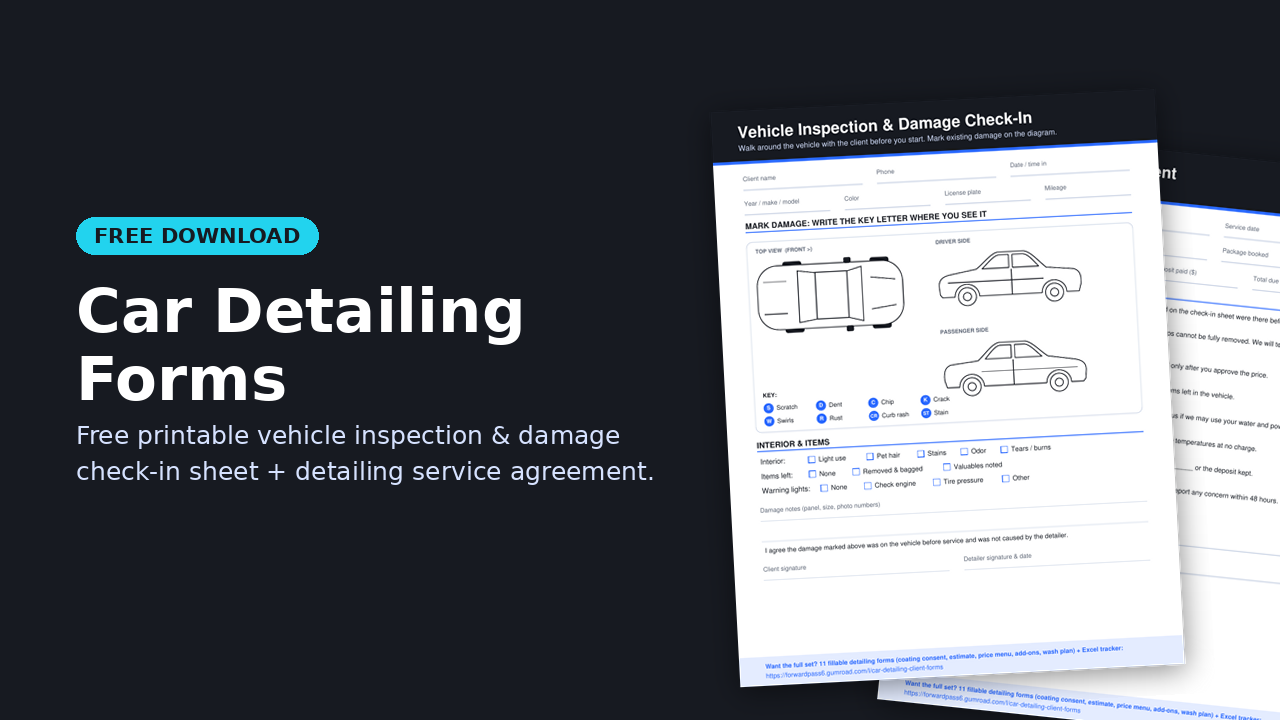
Free Car Detailing Forms
A printable vehicle inspection & damage check-in sheet with car diagrams plus a simple detailing service agreement.
Download free →1. Keep your base packages and add winter add-ons
Clients compare packages, so keep your standard interior, exterior and full detail prices the same all year. Then add a winter menu on top. Common winter add-ons:
- Salt stain extraction. Hot water extraction of carpets and mats to lift white salt marks, priced per area or per row.
- Undercarriage and wheel well rinse. Removing salt and road film from areas a normal wash misses, where you have the equipment and space to do it safely.
- Floor mat deep clean or rubber mat restore. Scrubbing, extracting and drying mats, or cleaning and dressing all-weather mats.
- Door jamb and sill cleanup. Salt and grime collect here and get onto clothing.
- Iron and fallout decontamination. Useful before applying a sealant for winter.
As an example only, a detailer might price salt stain extraction at $30 to $60 per row of carpet, a mat deep clean at $20 to $40 per set, and an undercarriage rinse at $25 to $50. These are example numbers, not market rates. Check what detailers near you charge and what each add-on costs you in time and product before you set your own prices.
2. Charge for condition, not the season
Two cars can come in on the same snowy day and be completely different jobs. Instead of a blanket winter surcharge, use a condition fee that you explain at check-in. For example, a light, moderate and heavy level for interior salt and slush, each tied to how much extra time it takes. Take photos at check-in, note the level on your vehicle inspection form, and get the client's approval before you start.
If you prefer a simple rule, some detailers use a time-based fee: anything beyond the package's normal time is billed at the hourly rate, in set increments, after the client approves it. Whichever method you use, apply it the same way every time and put it in writing.
3. Price winter protection as a package
Late fall and early winter is the best time to sell protection. Clients want the car ready for salt season, and a protected finish makes your winter maintenance washes faster. Package options might include:
- A pre-winter exterior detail with decontamination and a paint sealant or wax.
- Interior protection, such as fabric protection on carpets and a set of all-weather mats installed.
- Glass coating for better visibility in sleet and rain.
- Wheel protection to make brake dust and salt easier to rinse off.
Price each package at your target hourly rate times the time it takes, plus product costs, then round to a clean number. If you offer ceramic coatings in winter, follow the product's temperature and curing instructions, and only apply them where you can control the conditions, such as a heated garage.
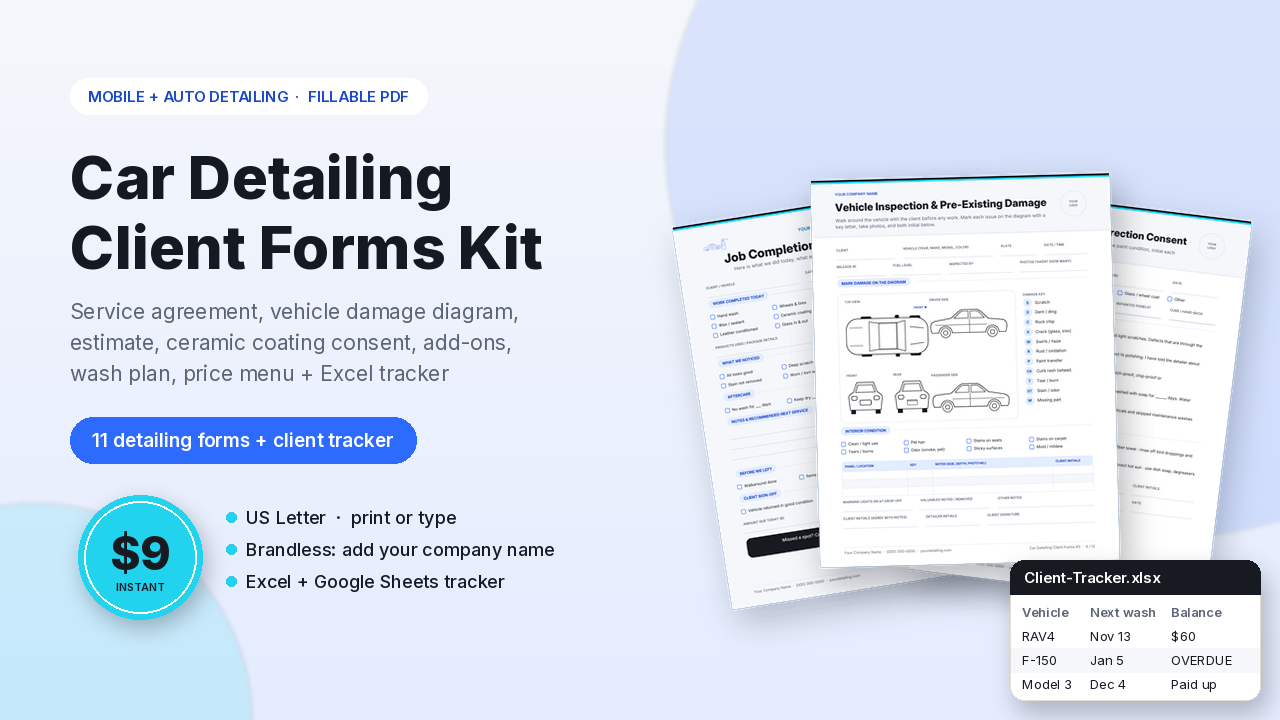
Car Detailing Client Forms Kit
11 fillable forms (client & vehicle profile, service agreement, vehicle inspection with damage diagram, package price menu, estimate, ceramic coating & paint correction consent, job completion report and more) plus an Excel client tracker. Want every kit? See the bundle.
Get it →4. Set cold-weather rules and mobile fees
Mobile detailers face extra costs in winter: heating water, protecting hoses and equipment from freezing, longer drying times and more travel delays. Common ways to handle it:
- A minimum outdoor temperature for exterior work, with interior-only service or rescheduling below it.
- A garage or covered space requirement for exterior details in cold weather.
- A cold-weather or travel fee for jobs that need extra setup, such as heating water or a generator.
- A weather rescheduling policy: who can cancel for snow or ice, how much notice is needed, and whether the deposit carries over.
If you have a shop, a heated bay is a selling point. Some detailers charge a small premium for shop-only winter exterior work, or include it in the package price and make it the main reason to book with them.
5. Use gift cards and maintenance plans to fill the slow season
January and February are often quiet for detailers. Holiday gift cards bring in cash in December and bookings in the new year. Sell them for named packages, such as a winter interior refresh, so the value is clear, and track each card with its number, value and redemption date.
Winter maintenance plans do the same thing for regular clients. As an example, a plan could include a maintenance wash and quick interior vacuum every two weeks at a set monthly price, with salt extraction priced separately when needed. Ask for payment in advance, set a minimum term, and write down what each visit includes so the plan does not slowly turn into a full detail every time.
6. Write down what is included
Most winter disputes come from expectations. Note on the estimate or service agreement that salt stains may not be fully removed in one visit, that heavily soaked carpet may need extra drying time, and that existing chips, scratches and rust are recorded at check-in and are not caused by the detail. List the add-ons the client approved and their prices, and have the client sign or initial the vehicle inspection and the estimate before you start.
A worked example (example numbers)
Say your full detail for a midsize SUV is $220 at your normal rate, and your winter add-ons are salt stain extraction at $45 per row, a mat deep clean at $30 per set, an undercarriage rinse at $35 and a paint sealant upgrade at $80. A client brings in a midsize SUV with heavy salt on the front and rear carpets and wants the car protected for the rest of the winter.
- Full detail, midsize SUV: $220
- Salt stain extraction, 2 rows at $45: $90
- Mat deep clean, 1 set: $30
- Undercarriage rinse: $35
- Paint sealant upgrade: $80
- Estimate total: $455, approved and signed at check-in
- Optional: winter maintenance plan offered at the end of the visit
These numbers are examples only. Run the same math with your own rates, time and product costs, and send it as a written estimate that lists each add-on, so the client understands why a winter detail costs more than a summer one.
Before you quote
Ask a few questions before the client books: the vehicle type, how long since the last detail, whether the carpets are wet or crusted with salt, and whether you will have access to a garage or covered space. Ask for photos if you can. At check-in, walk around the vehicle, note existing damage on an inspection form, confirm the add-ons and the total, and get a signature. A clear winter process protects your time, and a client who sees the before-and-after on a salty car is likely to book again before spring.
FAQ
Should car detailing cost more in winter?
Often, yes, but only for the extra work. A winter interior with salt-crusted carpets and mats takes longer than a summer one, and road film and salt on the lower panels need more prep. Keep your base packages the same all year and charge for the extra time with clear add-ons or a condition fee, so clients can see what they are paying for.
How much should I charge to remove salt stains from carpets?
There is no standard price. Many detailers charge a flat add-on per area, such as per row of carpet or per set of mats, or price it by the time it takes at their hourly rate. Look at the vehicle before you quote, since light white marks and soaked, crusted carpet are very different jobs, and write the price on the estimate before you start.
Can I do mobile detailing when it is below freezing?
It depends on your setup. Water can freeze on paint, glass and the ground, and many products have a minimum application temperature on the label. Many mobile detailers set a minimum temperature for exterior work, move to interior-only service, or work only in a client's garage or a rented heated bay in cold weather. Put your cold-weather rules in your service agreement.
What winter protection services can I offer?
Common options are a sealant or wax before the first snow, interior all-weather mats, fabric protection, and wheel and glass coatings. Ceramic coating can also work, but curing needs suitable temperature and time, so check the product instructions. Price each as a package or add-on and say how long it is expected to last.
Should I sell holiday gift cards for detailing?
Gift cards are a simple way to bring in revenue in a slow month and fill the calendar in January and February. Sell them for a named package or a fixed dollar amount, state any expiry or terms allowed in your state, and track each one so it is honored correctly.
How do I keep winter clients coming back?
Offer a winter maintenance plan, such as a wash and interior refresh every two or four weeks at a set price, paid in advance or by subscription. Regular visits keep salt from building up, make each visit faster, and give you steady income through the slow season.
This page is general guidance, not legal, tax or insurance advice. Business, licensing, gift card and consumer rules vary by state and city, so check your local rules and have your agreement reviewed by an attorney or insurer.
Related templates
Free Car Detailing Forms
A printable vehicle inspection & damage check-in sheet with car diagrams plus a simple detailing service agreement.
Download free →Car Detailing Client Forms Kit
Fillable auto detailing forms plus an Excel client tracker with balances and next-service dates.
Get it →