Window Cleaning Estimate Template: How to Price Per Pane (Free Checklist)
How to price window cleaning per pane or per window, and what to put on a window cleaning estimate: window types, inside and out, height and access, add-ons, existing damage, terms and a signature line.
Why a written window cleaning estimate matters
Window cleaning looks simple to price until you are standing in front of a two-story colonial with storm windows, French doors, a sunroom and a skylight. Quote a round number from the curb and you will either lose the job to a cheaper competitor or spend twice as long as you planned. A written window cleaning estimate solves that. It counts what you will actually clean, shows how each window is priced, sets expectations about scratches, failed seals and hard-water spots, and gives the client something to sign. An itemized quote also sells better: a homeowner who sees "22 standard panes, inside and out" understands the price in a way a single number never explains. This guide shows how to price per pane and what to include on the estimate.
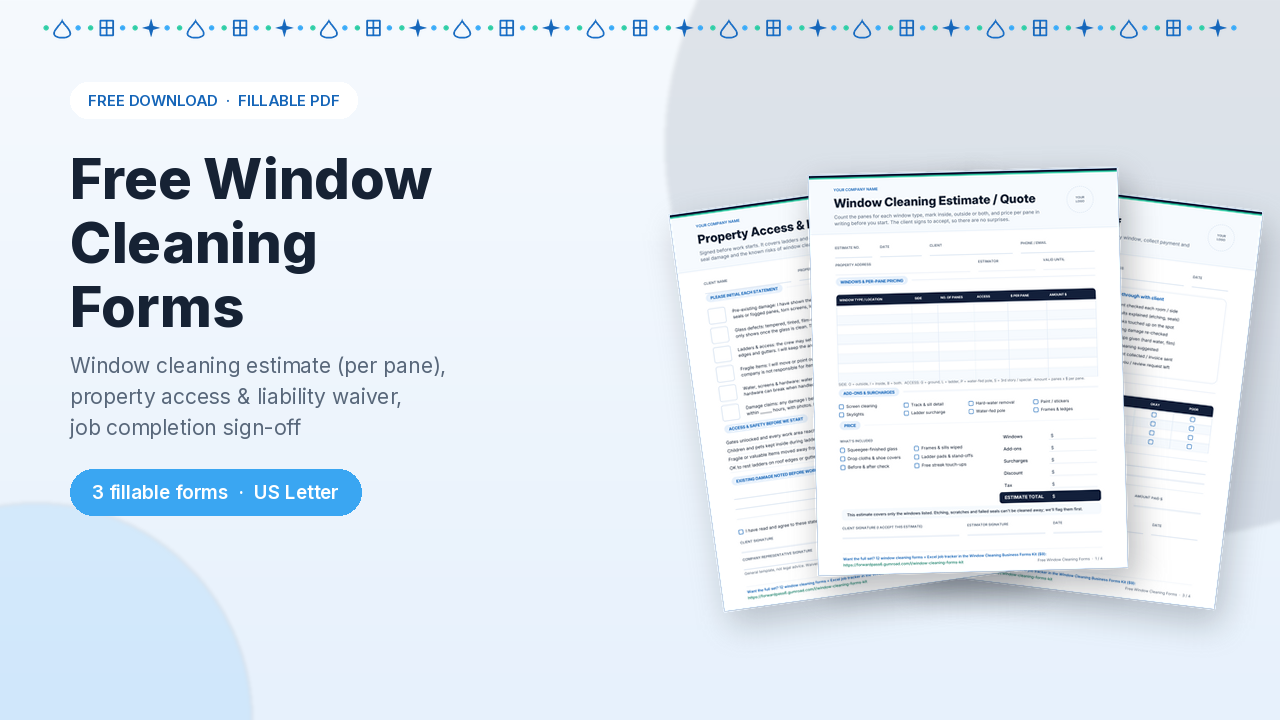
Free Window Cleaning Forms
A free fillable window cleaning estimate / quote sheet with per-pane pricing rows, a property access & liability waiver and a job completion sign-off for residential and storefront window cleaning jobs.
Download free →Per pane, per window or by the hour?
There are three common ways to price residential window cleaning, and most pros end up using a mix:
- Per pane: you count individual pieces of glass and charge a rate for each. It is the most accurate method, because a window with eight divided lites really is more work than one big picture window.
- Per window: one price per window unit (usually counting both sashes of a double-hung window as one window). It is faster to quote and easier for clients to understand, but you need separate rates for large, small and divided windows.
- Hourly or by the house: an hourly rate, or a flat price by house size. Simple, but harder to defend to the client and easy to underquote on houses with lots of glass.
Whichever you choose, write down your definition. "Pane" can mean one side of one piece of glass or both sides, and "window" can mean one sash or the whole unit. Put the definition on your price sheet and your estimate so you and the client count the same way.
How to set your per-pane price
Do not copy a competitor's rate card. Build your price from your own numbers, then check it against your local market:
- Time a typical pane. Clean a few houses and record how long a standard pane takes outside only and inside and out, including moving ladders and drop cloths. Many pros find inside work takes noticeably longer than outside because of furniture, blinds and care around floors.
- Pick your hourly target. Decide what an hour of work has to earn to cover your labor, insurance, vehicle, fuel, supplies, equipment wear, marketing and profit.
- Convert to a pane rate. Divide your hourly target by the panes you clean per hour. For example, if your target is $60 an hour and you average 12 outside panes an hour, your outside rate is $5 a pane. If inside and out averages 7 panes an hour, that rate is about $8.50.
- Add multipliers for harder glass. French and divided-lite panes, second-story ladder panes, skylights, storm windows and large picture windows usually get their own higher rate or a multiplier (for example 1.5 times standard for ladder work).
- Set a minimum job charge so small jobs still cover your drive and setup time.
The numbers above are only an example. Rates vary widely by region, house style and season, so test your price, track how long jobs really take and adjust.
1. Your business and the client details
Start the estimate with your business name, logo, phone, email and website, plus license or insurance details if your area requires them. Add an estimate number, the date and a "valid until" date (30 days is common). Record the client's name, phone, email and property address, the number of stories, any gate or access code and whether pets will be home. For storefronts and offices, note the contact person, the building manager and who receives the invoice.
2. Every window, counted by type
The heart of the estimate is the window table. Walk each side of the building (front, back, left, right) and list windows by type on separate lines, with a pane count for each:
- Standard double-hung, casement and slider panes
- Picture and other large fixed windows
- French and divided-lite windows and doors (count the lites)
- Storm windows, which add a second set of glass
- Glass doors and sliding patio doors
- Skylights, transoms and sunroom or conservatory glass
- Storefront glass for commercial routes
For each line, mark the side (outside only, inside only or both). Clear counts are what make per-pane pricing fair, and they let you quote the same house again next season in seconds.
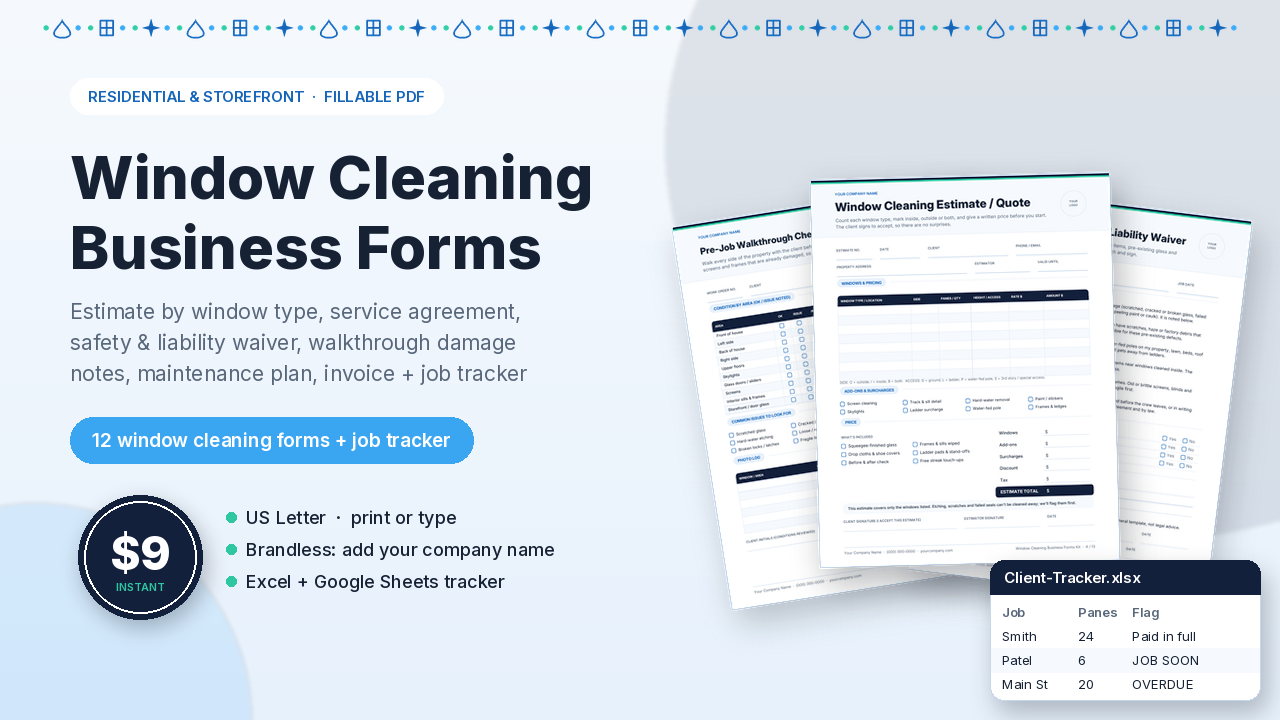
Window Cleaning Business Forms Kit
A 13-page fillable PDF with 12 forms (inquiry and booking, per-pane pricing worksheet, estimate by window type, service agreement, access, safety and liability waiver, walkthrough checklist and photo log, weekly route schedule and work order, completion sign-off, recurring maintenance plan, invoice, specials flyer and review / referral cards) plus an Excel job tracker that prices by the pane and shows costs and profit.
Get it →3. Height and access
Access changes both time and risk, so give it its own column: ground level, step ladder, extension ladder, water-fed pole, or third story and above. Note anything that slows you down: steep slopes, landscaping under the windows, decks with no ladder footing, windows over a roof, interior windows behind heavy furniture or high entry glass. Price ladder and pole work at a higher rate or add a surcharge line, and say on the estimate which windows you will not access safely (some pros decline anything above a certain height). If you use a water-fed pole for upper outside glass, mention it so the client knows the method.
4. Add-ons and extras
List extras as optional, separately priced lines so the client can pick what they want:
- Screens: removing, washing and reinstalling, priced per screen
- Tracks and sills: vacuuming and wiping, priced per window
- Hard-water stain removal, usually by the pane or the hour, with a note that results depend on how long the minerals have been there
- Paint, sticker or construction debris scraping, common on new builds
- Interior high glass and chandeliers, if you offer them
- Gutter cleaning, solar panel cleaning or exterior washing if you bundle services
Itemized add-ons raise the average ticket without making the base price look high, and they end arguments about what was "supposed to be included".
5. Existing damage and realistic results
Glass shows everything once it is clean, so set expectations before you start. Walk the property and note, with dated photos, any scratched or etched glass, failed seals (fogging between double panes), cracked or chipped panes, torn or bent screens, broken balances or locks, rotted frames and loose glazing. Then put realistic results in writing: hard-water etching and old scratches will not wash out, fogged insulated glass can only be fixed by replacing the unit, and some streaks may appear in direct sun. Many pros pair the estimate with a short property access, safety and liability waiver and a walkthrough checklist that the client initials.
6. What is included and what the client does
Spell out what the price covers: cleaning the glass on the sides listed, detailing frames where they meet the glass, drop cloths or towels for interior work, wiping drips from sills, and a final walkthrough. Then list the client's part: clearing furniture and fragile items from window areas, raising blinds or opening curtains, unlocking gates, keeping pets inside or away, and giving access to an outdoor water source if you need one.
7. Terms: weather, touch-ups, payment and cancellations
Add a few short terms under the price. Weather: outside work may be rescheduled for rain, freezing temperatures or high wind. Touch-ups: how long the client has to report a streak or missed pane (24 to 72 hours is common) and that you will come back to fix it. Payment: when the balance is due, accepted methods and any late fee. Cancellations: how much notice you need and whether a lock-out is charged. Photos: whether you may use before and after photos without the address.
8. Recurring service and the signature
Window cleaning sells best as a repeat service. Offer a recurring plan on the estimate, such as monthly or every other week for storefronts and quarterly or twice a year for homes, with the per-visit price, what each visit includes (for example outside every visit, inside twice a year) and how to skip or cancel. Then finish with an acceptance line: "I accept this estimate", with the client's signature, printed name and date, plus yours. The signed estimate becomes your work order, route entry and invoice.
A note on the law, safety and insurance
This checklist is educational, not legal advice. Business licensing, insurance requirements, ladder and fall-protection rules, contract and waiver wording, sales tax on services and recurring billing rules vary by state, county and city. Follow ladder safety practices, check your local rules, and have an attorney or your insurer review your agreement and waiver before you use them.
FAQ
How do you price window cleaning per pane?
Time how many standard panes you clean per hour, then divide your hourly target by that number. For example, a $60 hourly target at 12 outside panes an hour is $5 a pane. Charge more for inside and out, French or divided-lite panes, ladder or water-fed pole work, skylights and storm windows, and set a minimum job charge. Check your rates against your local market.
What is the difference between pricing per pane and per window?
Per-pane pricing counts each individual piece of glass, so windows with many small lites cost more. Per-window pricing charges one rate per window unit, which is quicker to quote but needs separate rates for large, small and divided windows. Whichever you use, define it on your estimate.
What should a window cleaning estimate include?
Your business and the client details, an estimate number and expiry date, each window type with its pane count and side (inside, outside or both), height and access, your rate and line amount, optional add-ons such as screens, tracks and hard-water removal, existing damage notes, what is included, weather, touch-up, payment and cancellation terms, an optional recurring plan, the total and a signature line.
Do window cleaners charge extra for screens and tracks?
Most do. Screen cleaning is usually priced per screen and track and sill cleaning per window, listed as optional add-ons on the estimate so the client can choose them.
Can window cleaning remove hard-water stains and scratches?
Light mineral spots can often be removed with a dedicated treatment, which is usually priced separately. Etching from long-term hard water, scratches and fogging inside double-pane glass cannot be cleaned away. Note these on the estimate and walkthrough so the client knows what to expect.
Do I need a waiver for window cleaning?
Many pros use a short property access, safety and liability waiver alongside the estimate. It covers pre-existing glass and seal damage, ladder access, fragile items near windows, screens and hardware. Rules vary by state, so have an attorney or insurer review your wording.
This page is general guidance, not legal advice. Licensing, insurance, ladder safety, waiver and sales tax rules vary by state and city and change over time, so check yours before you quote or sign.
Related templates
Free Window Cleaning Forms
A free fillable window cleaning estimate / quote sheet with per-pane pricing rows, a property access & liability waiver and a job completion sign-off for residential and storefront window cleaning jobs.
Download free →Window Cleaning Business Forms Kit
Fillable per-pane estimate, service agreement, safety waiver, walkthrough photo log, maintenance plan and invoice plus an Excel job tracker.
Get it →