How Much to Charge as a Makeup Artist: Bridal, Trial, Event and Travel Fees, Deposits and Bridal Party Pricing (Plus a Free Makeup Consent Form)
How freelance and bridal makeup artists can set prices: work out your costs and hourly floor, compare local prices, price bridal, trials, bridal party and event makeup, add travel, early-start and touch-up fees, and protect bookings with deposits and cancellation rules, with a worked example and a free printable makeup artist consent form.
Why makeup artist pricing goes wrong
Many makeup artists copy a price from another artist or a social post, then lose money on long travel, 5 a.m. starts, unpaid trials and brides who cancel a month out. A full bridal day can include a trial, travel, an early call time, several bridal party faces and on-site touch-ups, and each of those takes time and product. A clear method fixes this: know your costs and hourly floor, price each service by the time it really takes, charge for travel and early starts, and protect your calendar with a written deposit and cancellation policy.
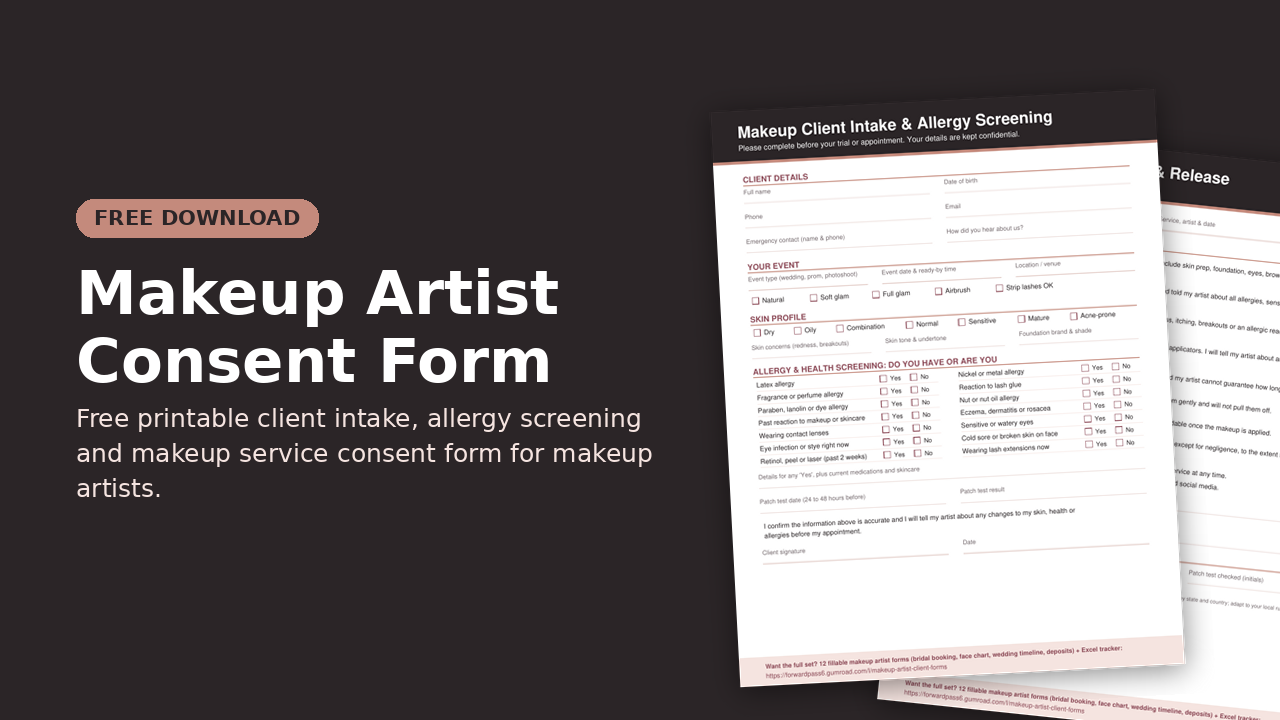
Free Makeup Artist Consent Form
A fillable, printable makeup consent form with client intake, skin profile and allergy and patch test screening.
Download free →1. Work out your costs and hourly floor
Add up your yearly makeup and skincare products, brushes, sponges, disposables and sanitation supplies, kit replacement, lighting, chair and travel case, car costs and parking, insurance, licensing and training, website, booking software and card fees, marketing and portfolio shoots, and self-employment taxes where they apply. Add the income you want, then divide by the hours you can realistically book in a year. That is your hourly floor. Count setup, cleanup and drive time: a 45-minute face on location can easily block two hours of your day.
2. Compare local prices
Look at what salons, makeup studios and freelance artists near you list on their websites, booking pages and wedding directories. Note what each price includes: lashes, airbrush, a touch-up kit, travel within a set distance, or a trial. Compare like with like. You can price toward the top of your area for a strong bridal portfolio, many reviews, airbrush or editorial training, or a team that can cover large parties.
3. Price bridal, trials, bridal party and events
Time each service you offer: bridal makeup, bridal trial, bridesmaid or family makeup, event or prom makeup, photo shoot makeup and lesson or consultation. Multiply each typical time (including setup and cleanup) by your hourly floor, add product cost, and round to a clean menu price. Bridal usually costs more than event makeup because of the trial, the timeline and the stakes. Many artists set a minimum booking for on-location weddings, such as a set number of faces or a minimum total, so travel is worth it. Keep a short add-on list, such as strip or individual lashes, airbrush, skin prep or a touch-up kit, so extras are charged instead of given away.
4. Add travel, early-start and touch-up fees
Decide how far your price includes travel, then charge per mile or by zone beyond that, plus parking, tolls and hotel stays for far-away weddings. Set an early-start fee for call times before a set hour, and an hourly stay-on-site or touch-up rate if the client wants you there for photos or the reception. Write down how long a trial is valid and whether a trial fee is credited toward the wedding day.
5. Set deposit and cancellation rules
Many bridal artists take a non-refundable deposit or retainer to hold the date, often a share of the total, with the balance due before or on the wedding day. Set a cancellation window, rules for reducing the number of faces after booking, and what happens if the date moves. For event and studio clients, set a late policy and a no-show fee. Record allergies, skin conditions and patch test results on a signed consent form before you start, and put every rule in a written booking agreement so clients agree before the day.
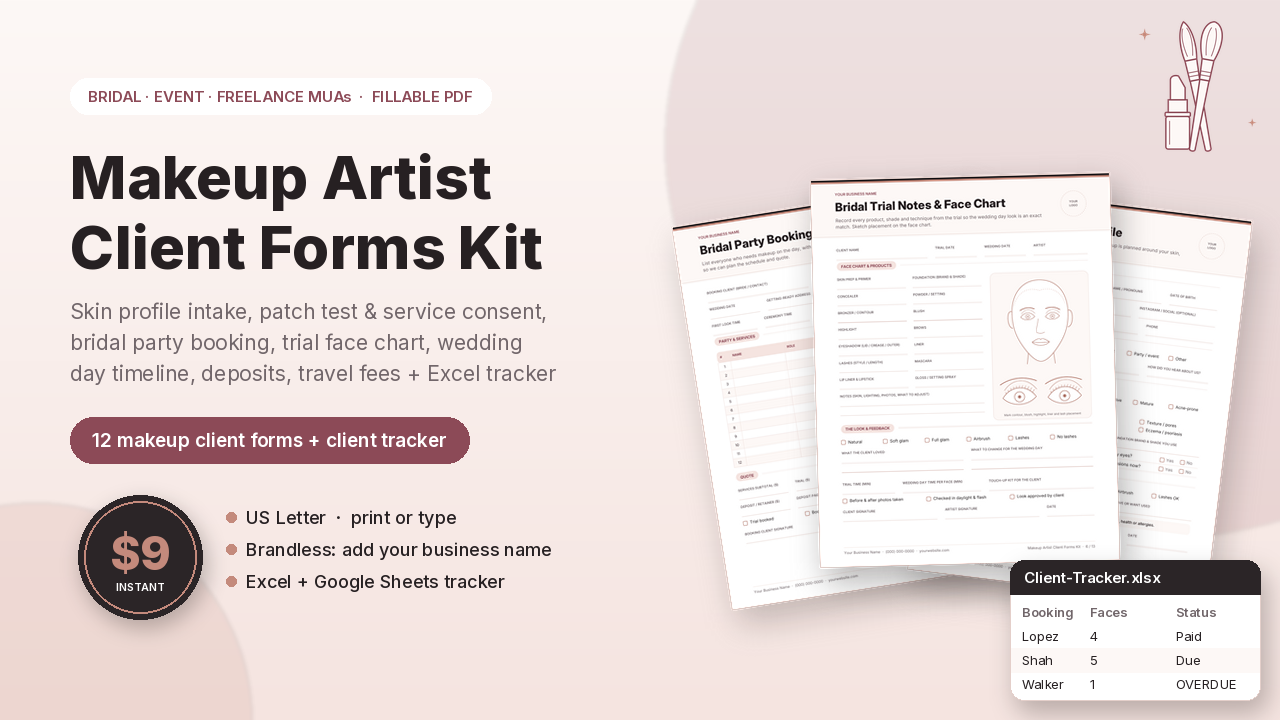
Makeup Artist Client Forms Kit
12 fillable forms (client intake, patch test consent, bridal party booking form, trial face chart, wedding day timeline, booking agreement with deposit and cancellation policy, travel fee sheet and more) plus an Excel tracker with bridal party pricing and deposit status.
Get it →6. Raise prices the right way
Review prices at least once a year and whenever product, fuel or insurance costs go up. Honor prices for weddings already booked, and give regular clients notice before a change. Raise prices in clean steps, starting with bridal and on-location work. If your peak wedding dates are booked a year ahead, that is usually a sign your prices are too low.
Worked example (example numbers)
These are example numbers to show the method, not a recommended price. Say your yearly costs come to $12,000 and you want to earn $45,000, so you need $57,000. If you can book about 1,000 hours a year, your floor is about $57 an hour. A bridal face that blocks 1.5 hours on location with $10 in product: 1.5 x $57 + $10 = $95.50, so about $96 is the lowest price that covers your costs and income goal, before travel and early-start fees. A bridesmaid face that blocks 1 hour with $7 in product: 1.0 x $57 + $7 = $64. Treat these as floors, not menu prices: compare them with local prices and price at or above the market where your portfolio and reviews support it.
Put your prices and policies in writing
Most makeup disputes start with nothing on paper: a bride who says she did not know the deposit was non-refundable, a party that shrank by three faces, or an allergy nobody recorded. A signed consent and intake form records skin type, allergies and patch tests. A booking agreement sets the deposit, balance, travel and cancellation rules. A bridal party booking form and wedding day timeline keep the morning on schedule, and a face chart from the trial keeps the wedding look consistent.
FAQ
How much should a makeup artist charge?
Work out your hourly floor from your costs and income goal, multiply by how long each service blocks on your schedule including setup, cleanup and travel, add product cost, then compare with local prices for the same service.
Should bridal makeup cost more than event makeup?
Usually yes. Bridal work often includes a trial, an early call time, a detailed timeline and more pressure to get it right, so many artists price it above standard event makeup.
Should I charge for a bridal trial?
Many artists charge for trials because they take a full appointment and product. Some credit part of the trial fee toward the wedding day if the client books. State your rule in writing.
How should makeup artists charge for travel?
A common method is to include travel within a set distance and charge per mile or by zone beyond it, plus parking, tolls and lodging for distant weddings.
Should makeup artists take a deposit?
Many bridal and event artists take a non-refundable deposit or retainer to hold the date, with the balance due before or on the day. Put the terms in a signed booking agreement.
Do I need a makeup artist consent form?
A signed consent form records the client's skin type, allergies, patch test results and agreement to your policies, which helps protect you and the client. Check local licensing and insurance requirements.
This page is general guidance, not legal, tax or licensing advice. Rules on beauty services, licensing, insurance and deposits vary by location, so check the rules where you work.
Related templates
Free Makeup Artist Consent Form
A fillable, printable makeup consent form with client intake, skin profile and allergy and patch test screening.
Download free →Makeup Artist Client Forms Kit
Fillable bridal and event makeup forms plus an Excel booking tracker.
Get it →