Holiday & Winter Window Cleaning Pricing: How to Quote Pre-Holiday Cleans, Cold-Weather Jobs and January Slow Weeks (Plus Free Forms)
How window cleaners can price late November through January: which pre-holiday dates deserve a rush fee, how to quote interior-only and cold-weather jobs, what to charge around holiday lights and decorations, how to set minimums and deposits, and how to fill the January slow weeks, with a worked example and free window cleaning forms.
Why the holiday season needs its own window cleaning prices
For many window cleaners, late November and December are a strange mix. On one side, homeowners suddenly want sparkling glass before family arrives, before a holiday party, or before the house appears in the background of every holiday photo. On the other side, the days are short, the weather is cold or wet, and some exterior work becomes slower, riskier or impossible. Then January arrives, the holiday rush disappears, and the calendar can look empty for weeks.
If you quote your normal summer price for every winter job, you end up underpricing the hardest, most time-sensitive work and having nothing planned for the slow weeks. A simple seasonal price sheet fixes both problems: it charges fairly for the rush and the conditions, and it gives clients a reason to book with you again after the holidays.
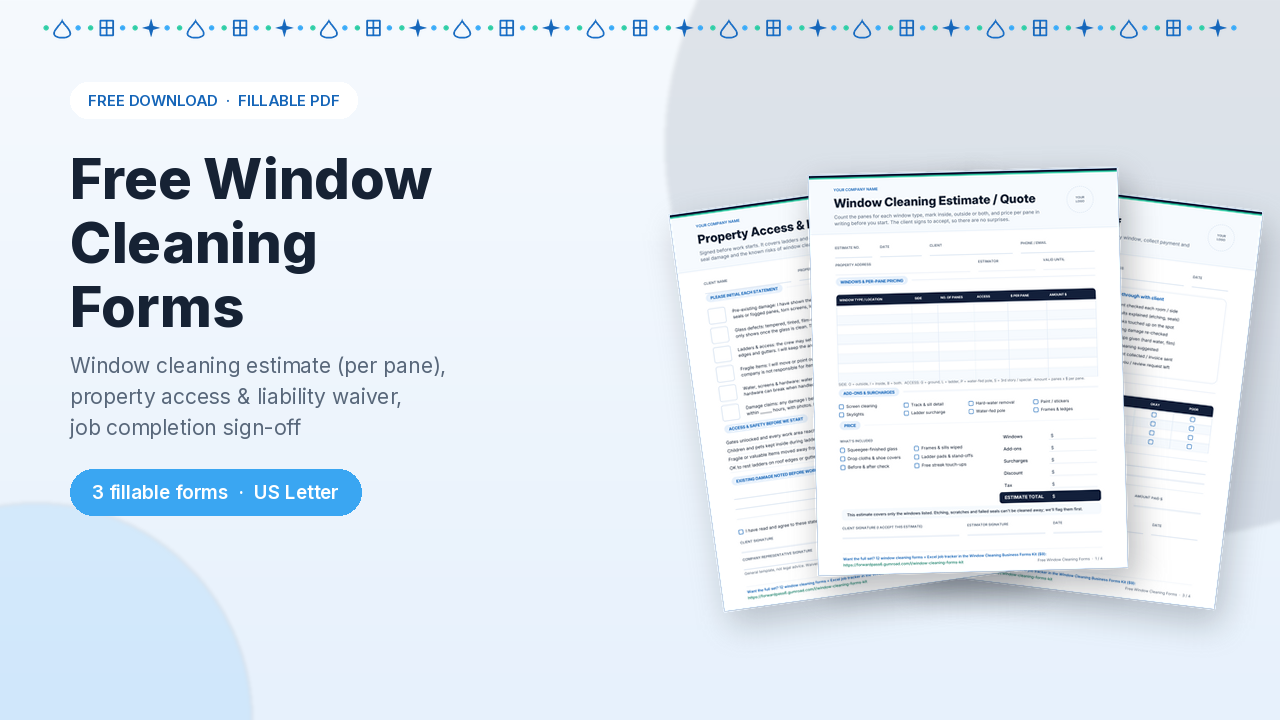
Free Window Cleaning Forms
A printable estimate form plus a simple service agreement for residential window cleaning jobs.
Download free →1. Start from your normal price, not from a guess
Holiday pricing works best as a set of adjustments on top of the price you already use, whether that is per pane, per window, per hour or a whole-house flat rate. If you have not written that base price down yet, do it first (our window cleaning pricing guide walks through costs, minimums and per-pane pricing). Then decide the seasonal rules below and add them as clear line items, so a client can see exactly why a December quote differs from a June quote.
Keep the base the same all year. Clients accept a rush fee or a cold-weather adjustment far more easily than a mysterious new per-pane price that appeared in December.
2. Decide which dates count as the pre-holiday rush
Be specific about dates. A vague line such as “holiday prices apply” invites arguments. Many cleaners split the season into simple bands:
- Peak rush: the week before Thanksgiving and the ten days or so before Christmas, when everyone wants the job done “before the guests arrive.”
- Normal winter weeks: early December and other weekdays where you have open slots.
- Slow season: most of January and often early February.
A rush or guaranteed-date fee applies only when a client needs a specific day inside the peak band. Clients who book early, or who are flexible about the day, simply pay your normal price. This rewards planning, spreads your workload, and makes the fee feel fair rather than greedy. Many cleaners also give regular clients first choice of pre-holiday slots before opening them to new customers.
3. Price interior-only and cold-weather jobs
Winter changes the work itself, so the quote should say how:
- Interior-only cleans. When exterior work is not practical, many homeowners still want clean glass inside for the holidays. Interior work often takes longer per window because of furniture, window treatments, decorations and floor protection. Price it as its own service rather than as “half” of a full clean.
- Cold-weather exteriors. Freezing temperatures can make water-fed poles and normal solutions impractical, and wet or icy ground makes ladder work slower. Some cleaners switch methods, schedule only on milder days, or add a winter adjustment to cover slower work. Whatever you decide, write a weather clause: who decides when it is too cold or icy, and that the job is rescheduled at no charge rather than done unsafely.
- Short daylight. Fewer working hours per day means fewer jobs. Factor this into how many bookings you accept, not just into the price.
4. Charge for decorations, lights and extra prep
Holiday homes come with extras that slow you down: window clings and stickers, garlands and wreaths around frames, candles and figures on sills, and string lights clipped to gutters or window frames. Add clear options to your price sheet:
- Decoration handling: a per-window or per-room add-on if you move and replace sill decorations, or a note that the client clears sills before you arrive.
- Sticker and residue removal: priced per window, because residue can take far longer than the glass itself.
- Working around exterior lights: say whether you work around lights or not, and that you are not responsible for light strands that are already loose or damaged. If you also install or remove lights, quote that as a separate service (see our Christmas light installation pricing guide).
Note pre-existing scratches, cracked panes, broken screens and failed seals on a walkthrough form before you start. Holiday jobs are often booked quickly by new clients, and a short documented walkthrough avoids disputes later.
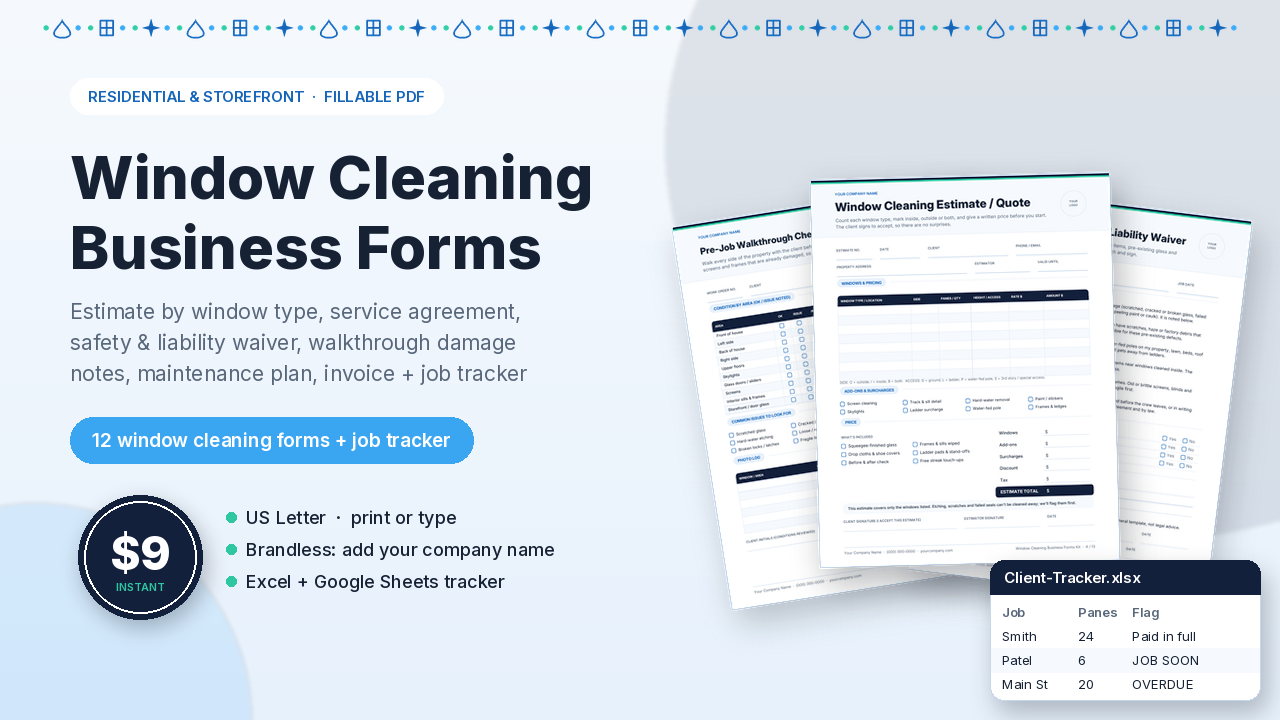
Window Cleaning Business Forms Kit
Fillable window cleaning business forms (client intake, estimate, service agreement, property waiver, walkthrough, job checklist, invoice and more) plus an Excel client and job tracker.
Get it →5. Set minimums, deposits and cancellation rules
Small pre-holiday jobs (“just the front windows before Saturday”) take the same travel and setup as larger ones, and they use up a slot you could sell twice in December. A job minimum, and a higher minimum for guaranteed rush dates, keeps these bookings worthwhile.
The biggest seasonal risk is the empty slot: you turn other clients away for a pre-party date, then the booking is cancelled the day before. Two simple tools help:
- A deposit for guaranteed dates in the peak band, applied to the final invoice, with clear terms for when it is refunded.
- A cancellation window and a late-cancellation fee for all holiday bookings. Weather reschedules that you initiate should never cost the client anything.
6. Fill January with packages, not discounts
Instead of slashing prices when the phone goes quiet, give clients a reason to book the slow weeks in advance:
- A post-holiday package: interior glass, tracks and sills after the decorations come down, booked at the same visit as the pre-holiday clean.
- A pre-booked spring clean: offer a small saving for clients who reserve their spring exterior clean during a winter visit.
- Recurring service: quarterly or twice-yearly plans with a set price per visit, which turn one-off holiday clients into regulars.
- Gift certificates: some clients like to buy window cleaning as a holiday gift for parents or neighbors. Put an expiry policy and what it covers in writing, and check local gift card rules.
Packages keep your base price intact and give you predictable work, which is usually better than a January discount that trains clients to wait for one.
7. A worked example (example numbers only)
These numbers are made up to show the math. Use your own costs and local market rates.
- Base price (example): $8 per pane, outside and inside, with a $150 job minimum.
- Holiday policy (example): interior-only $6 per pane; guaranteed date in the peak band +15% of the job; decoration handling $5 per window; sticker removal $4 per window; $50 deposit on guaranteed dates.
- Booking (example): 24 panes, full clean, guaranteed date three days before Christmas, decorations moved on 6 windows, stickers removed from 2 windows.
Base: 24 × $8 = $192. Rush fee: 15% of $192 = $28.80. Decorations: 6 × $5 = $30. Stickers: 2 × $4 = $8. Example total: $258.80, with the $50 deposit taken at booking and the balance on completion. At the same visit, the client is offered a post-holiday interior package for mid-January at the normal interior rate: 24 × $6 = $144, so the $150 job minimum applies unless the client adds tracks and sills.
Put it all on one page, early
Write your seasonal bands, rush fee, interior-only price, add-ons, weather clause, minimums, deposit and cancellation terms on a single price sheet and share it with clients in November, before the requests pile up. Use the same estimate form for every quote, record the walkthrough, and send a clear invoice so the final bill matches what you agreed.
FAQ
Should window cleaners charge more during the holidays?
Many do, but usually through a rush or guaranteed-date fee for the busiest days rather than a higher base price. Clients who book early or are flexible on the date can still pay the normal rate. What matters most is sharing the rules before anyone books.
Can you clean windows in freezing weather?
Some exterior work is possible in cold weather with adjusted methods, but freezing temperatures, ice and wet ground make it slower and riskier. Many cleaners offer interior-only service or reschedule exterior work to milder days, and put a weather clause in their agreement.
How should I price interior-only window cleaning?
Price it as its own service. Interior work often involves moving furniture and decorations, protecting floors and working around blinds and curtains, so it is rarely just half the price of a full clean. Many cleaners use a separate per-pane or per-window interior rate.
Should I charge extra for holiday decorations on windows?
It is common to add a per-window charge for moving sill decorations or removing window clings and residue, or to ask the client to clear sills before the visit. List these add-ons on your price sheet so they are not a surprise.
Should I take a deposit for pre-holiday window cleaning?
A deposit for guaranteed dates in the busiest weeks protects you if a client cancels after you turned down other work. Apply it to the final invoice and state when it is refunded, including a full refund if you reschedule for weather.
How do window cleaners get work in January?
Common approaches are post-holiday interior packages, pre-booked spring cleans, recurring service plans and gift certificates sold in December. These fill slow weeks without discounting your normal price.
This page is general guidance, not legal, tax or safety advice. Licensing, insurance, gift certificate and consumer rules vary by location, and working at height in cold or icy conditions carries real risk, so follow safe work practices and check your local requirements.
Related templates
Free Window Cleaning Forms
A printable estimate form plus a simple service agreement for residential window cleaning jobs.
Download free →Window Cleaning Business Forms Kit
Fillable window cleaning forms plus an Excel tracker for clients, jobs, invoices and follow-ups.
Get it →