Christmas Light Installation Contract: What to Include (Free Template)
What to put in a Christmas light installation contract, from roofline measurements and per-foot pricing to lease vs purchase, deposits, damage terms, takedown dates and storage, with free printable forms.
Why holiday lighting jobs need a written contract
Christmas light installation is a short, crowded season. You measure dozens of homes in October, install through early December, answer service calls when a strand goes dark, then come back in January to take everything down. With that many moving parts, a handshake deal leaves too much open: who owns the lights, when they come down, what happens if a gutter clip cracks a shingle, and whether the deposit is refundable if the client changes their mind. A one-page contract answers those questions before your ladder touches the house, and it makes your business look established next to the installer who quotes by text.
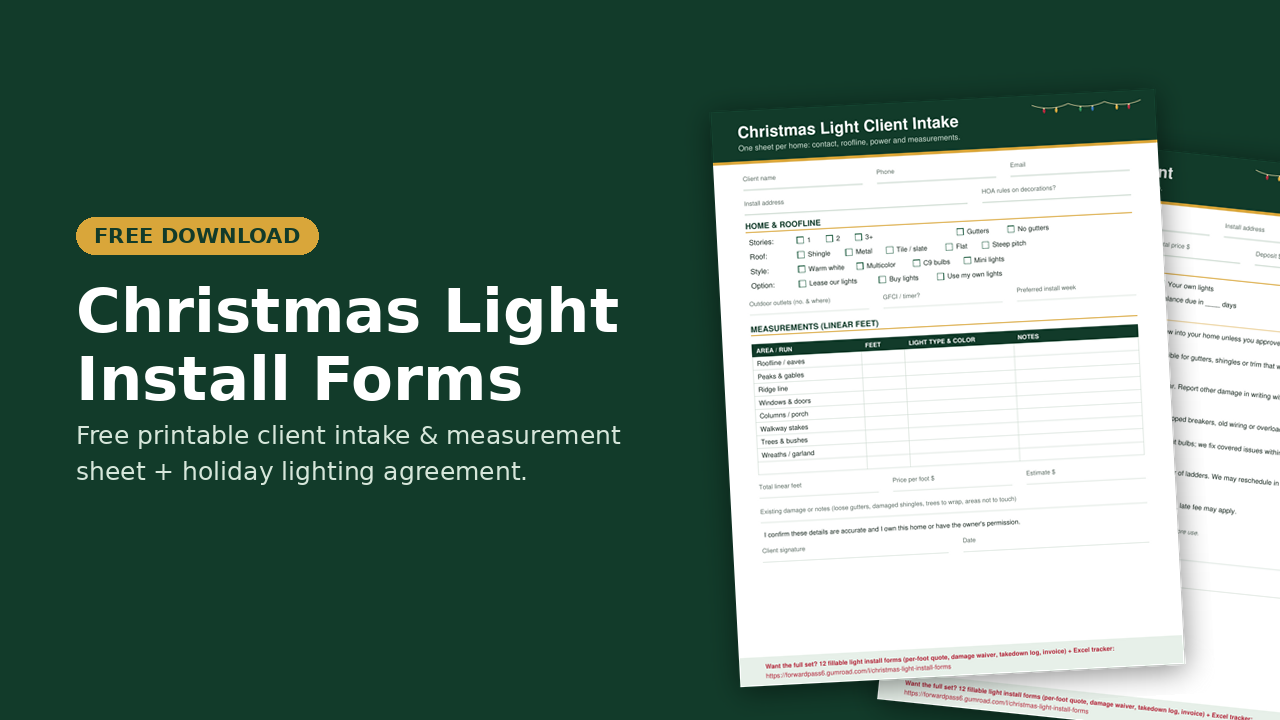
Free Christmas Light Installation Forms
A printable client intake & measurement sheet plus a simple holiday lighting agreement for Christmas light installers.
Download free →Start with the client intake and roofline measurements
Every good quote starts with accurate information. On the first visit or call, capture:
- Contact and property details: name, phone, address, gate codes, pets, and whether the home is in an HOA with lighting rules or date limits.
- The house itself: number of stories, roof type and pitch, gutter style, and anything that affects access such as landscaping or a steep driveway.
- Power: location of outdoor outlets, whether they are GFCI protected, and if the client wants a timer.
- Areas to decorate: roofline, peaks, ridge, windows, doors, columns, walkway stakes, trees, bushes and wreaths.
- Linear feet by run: measure each run separately and total it. This number drives your price, your material order and your crew time.
- Style and color: warm white, multicolor, C9 bulbs, mini lights or a mix.
A sketch of the front elevation with each run labeled saves arguments later about what was quoted.
How to price Christmas light installation
Most installers price by the linear foot for rooflines and by the item for trees, bushes, wreaths and stakes. Your per-foot rate should cover labor, clips, cords and timers, vehicle costs, insurance, the takedown visit and a few service calls. Many installers also set a job minimum so small homes still cover the drive and setup time.
Then decide how lights are supplied, because this changes your price and your contract terms:
- Lease: you supply the lights, install, take down and store them. The client pays each season and you own the inventory.
- Purchase: the client buys the lights and owns them. You may still offer takedown and storage for a fee.
- Client-supplied lights or install only: lower price, but state that you are not responsible for the condition or performance of their lights.
Showing lease and purchase prices side by side on the quote lets the client choose, and often lifts the average job value.
Deposits, payment and the install window
Install slots fill fast, so a deposit is what actually reserves the date. State the deposit amount, whether it is refundable and until when, and when the balance is due (on completion, or split between install and takedown). Give an install window rather than a single day, since rain, wind and ice can push a schedule. Add your late payment terms and accepted payment methods.
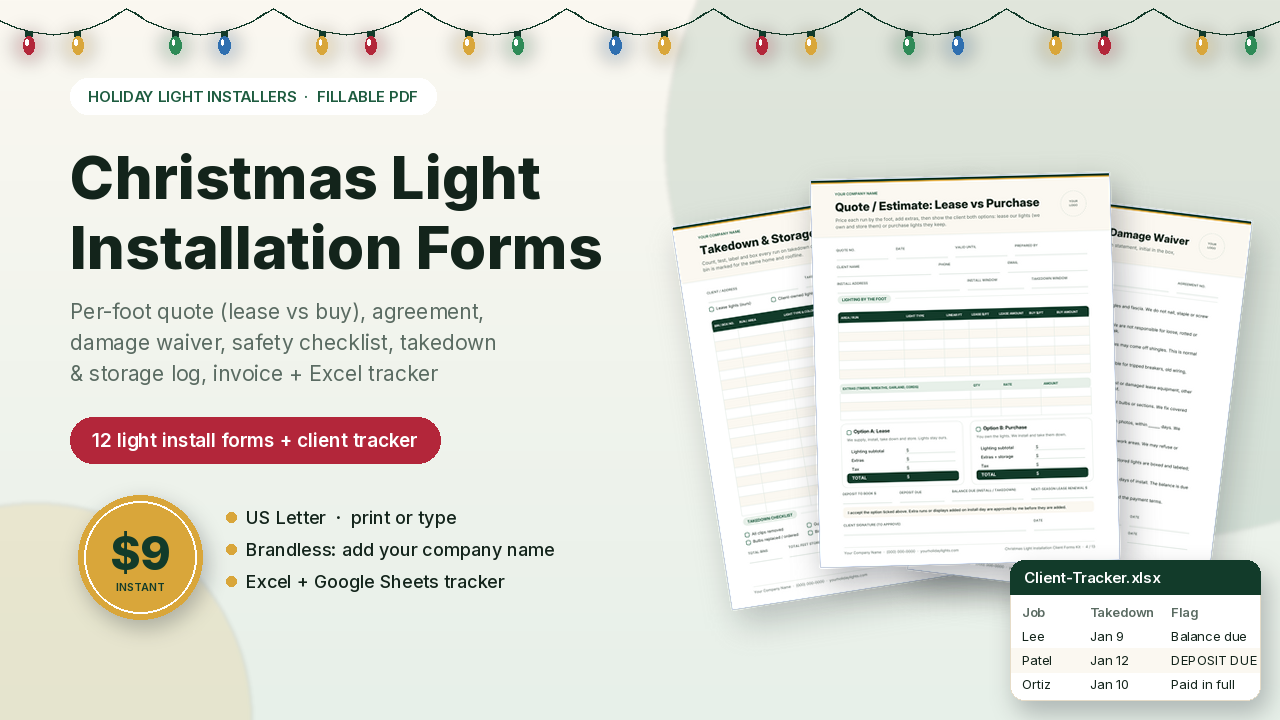
Christmas Light Installation Client Forms Kit
12 fillable forms (intake & roofline info, measurement & design worksheet, per-foot quote with lease vs purchase, service agreement, liability & property damage waiver, ladder / roof safety checklist, takedown & storage inventory, invoice, renewal form and more) plus an Excel client tracker.
Get it →Terms every holiday lighting contract should cover
- Attachment method: clips, not nails or staples, and no drilling unless the client approves.
- Existing condition: you are not responsible for loose shingles, rotted fascia or weak gutters that were already there. A pre-install photo log backs this up.
- Damage reporting: the client must report any damage within a set number of days.
- Power and outlets: tripped breakers, overloaded circuits and faulty outlets on the client side are not your responsibility.
- Service calls: how many are included, response time, and the fee for extra calls or damage caused by weather, pets or third parties.
- Takedown date: a target date or window, and what happens if the HOA or client wants it earlier.
- Storage: whether leased or purchased lights are stored by you, labeled, and for how long.
- Safety and liability: roof and ladder work is done at your discretion, and you can reschedule in unsafe weather.
Install day and takedown checklist
On install day, confirm the design with the client, test every strand on the ground before it goes up, check outlets and timer settings, and take before and after photos. At takedown, inventory every strand, clip set and timer, note anything broken, and label bins by client so next season's install is faster. Close the job with an invoice and a renewal form, because booking returning clients early is the easiest way to fill next year's calendar.
FAQ
Do I need a contract for a single-home light install?
Yes. Even small jobs involve ladders, roofs and property you do not own. A short agreement with a signed damage and existing-condition clause protects both sides.
Should I charge for takedown separately?
Many installers include takedown in the season price so it is never skipped. If you price it separately, put the takedown fee and date on the original contract.
How much deposit should I ask for?
It varies by market. Many installers ask for a portion of the total up front to hold the slot and cover materials, with the balance due at install or split across install and takedown.
What insurance do I need?
General liability is the usual minimum, and workers' compensation may be required if you have employees. Ask a local insurance agent what applies to roof work in your area.
This page is general guidance, not legal advice. Review the wording of any contract and check your local licensing, insurance, contract and HOA rules before you use it.
Related templates
Free Christmas Light Installation Forms
A printable client intake & measurement sheet plus a simple holiday lighting agreement for Christmas light installers.
Download free →Christmas Light Installation Client Forms Kit
Fillable Christmas light installation forms plus an Excel client tracker with deposits, takedown dates and OVERDUE flags.
Get it →