Photography Model Release Form: What to Include for Adults and Minors
What a photography model release should cover, from permitted uses and compensation to minors and parental consent, with a free printable adult model release.
What a model release is for
A model release is a signed permission from the person in a photo that lets you use their likeness in specific ways. It is separate from copyright. As the photographer you usually own the copyright in your images, but that does not automatically give you the right to use someone's face to promote your business, sell stock or run an ad. The release covers the person's side: their image, name and identity.
Whether you legally need one depends on where you work and how the photo is used. Commercial uses such as advertising, stock and product marketing are where releases matter most. Editorial uses like news or commentary are treated differently in many places. Because the rules vary, many working photographers simply get a release at every session where they might want to share the images, including in their own portfolio and social media.
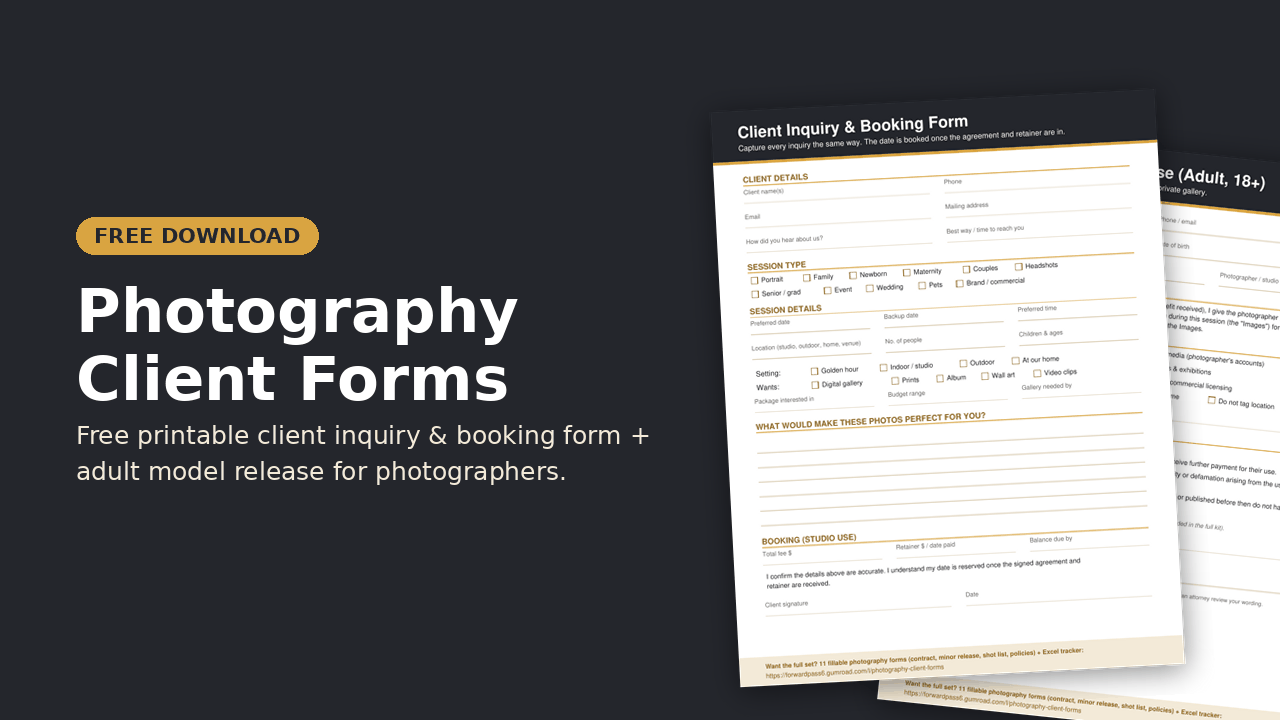
Free Photography Forms
A printable client inquiry and booking form plus an adult model release.
Download free →What to include in an adult model release
- Names and contact details: the model, the photographer or studio, and the date and location of the shoot.
- Description of the session: enough detail to identify which photos the release covers, such as a session type or a reference number.
- Grant of permission: plain wording that the model allows you to use, publish and edit the images.
- Permitted uses: tick boxes are clearer than legal paragraphs. Typical options are your portfolio and website, social media, print advertising, online ads, contests and awards, editorial use and stock licensing.
- Name and location use: whether you may use the model's name or tag them, and whether you may mention where the photos were taken.
- Restrictions: anything the model does not want, for example no use for sensitive subjects, no use in political or health ads, or no use of certain images.
- Compensation: what the model received in exchange, whether that is a fee, free prints or images, or a session discount. Some regions treat a release as stronger when consideration is stated.
- Duration and editing: how long the release lasts and that reasonable retouching and cropping are allowed.
- Signatures: model, photographer and the date, plus a witness line if you like.
Writing it in plain English
Clients sign what they understand. Short statements they can initial, such as "I allow these photos to appear on the photographer's website and social media", work better than a dense block of legal text. Plain wording also reduces the chance of a client later saying they did not realise what they agreed to.
Model releases for minors
Children cannot usually sign a binding release themselves, so a parent or legal guardian signs on their behalf. A minor release should add:
- Child's name and age, with the parent or guardian's name, relationship and contact details.
- Confirmation of authority: the signer states they are the parent or legal guardian with the right to give permission.
- Narrower uses by default: many family photographers limit minor images to portfolio and private galleries unless the parent ticks broader options.
- Privacy choices: no first names, no school names or uniforms, no location tags. Parents care about these details.
- Both parents where needed: for paid modeling, a second parent signature or extra paperwork may be expected in some areas.
For newborn and baby sessions, add a note about safety posing and composites if you use them, so parents know how certain poses are created. Teen and senior portraits often fall either side of the age of majority, so check birth dates before deciding which form to use.
Events, groups and the public
At weddings, parties and corporate events you cannot get a release from every guest. Photographers usually rely on the host's agreement for the event and avoid using identifiable guest images in advertising without a separate release. For featured individuals, such as a bridal party member you want on your homepage, ask for a short individual release. In public places, rules about photographing people and using the photos also differ by country and state.
When to ask for the release
Send the release with your booking paperwork, not at the end of the shoot when everyone is tired. Clients have time to read it, and you know before the session which images you can share. Keep signed releases on file with the session details for as long as you use the photos, and note any restrictions in your client records so they are not forgotten when you post.
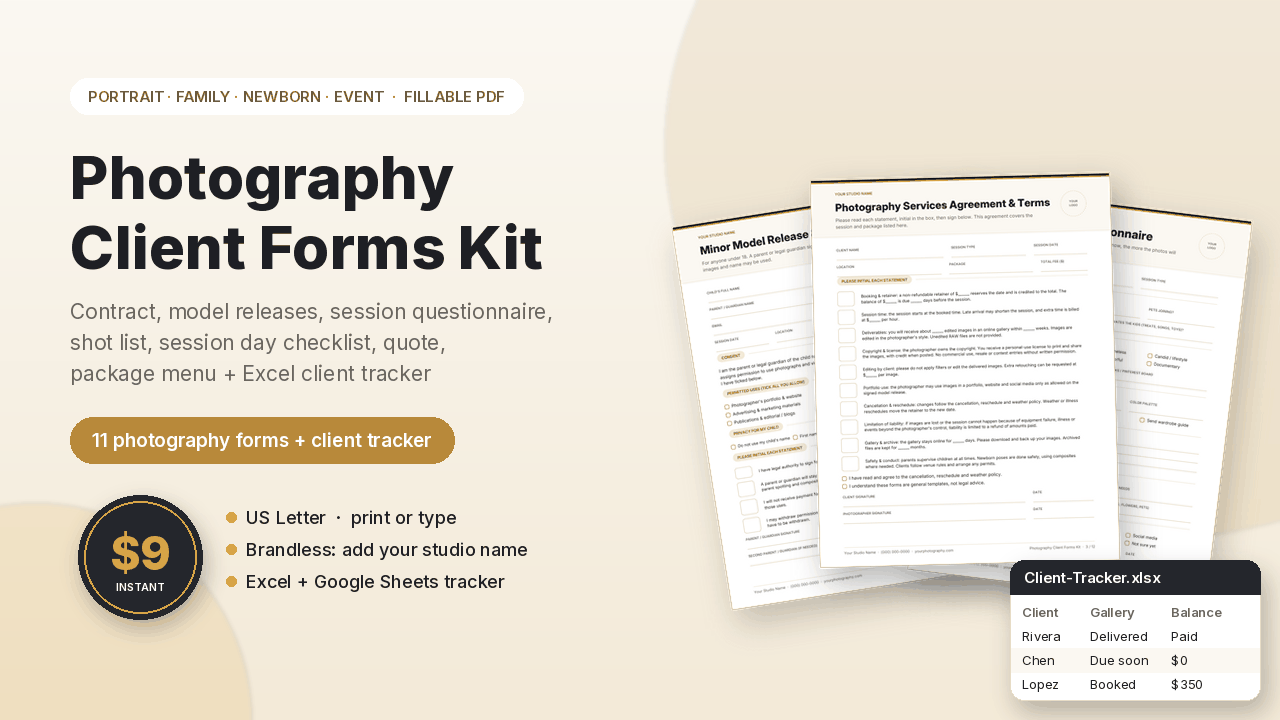
Photography Client Forms Kit
11 fillable photography forms (services agreement, adult and minor model releases, session questionnaire, shot list) plus an Excel client tracker.
Get it →A model release works best alongside a clear services agreement and a planning questionnaire. See our guide to the photography client questionnaire for what to ask clients before the session.
Please note: this page is general information, not legal advice. Model release, privacy, publicity and copyright rules vary by state and country, especially for minors. Have a local attorney review your release wording before you rely on it.
FAQ
What should a photography model release include?
The photographer and model's names, the shoot date, a description of the images, how they may be used, any payment, and signatures from both sides.
Do minors need a parent to sign a model release?
Yes. A parent or legal guardian should sign for anyone under 18, with their name and relationship to the model.
When do I need a model release?
You usually need one for commercial or advertising use of a recognizable person. Editorial use often does not, but rules vary, so check your local law.
Can a model withdraw a signed release?
It depends on the wording and local law. Many releases are written as irrevocable. Have the wording reviewed if you are unsure.
Related templates
Free Photography Forms
A printable client inquiry and booking form plus an adult model release.
Download free →Photography Client Forms Kit
11 fillable photography forms (services agreement, adult and minor model releases, session questionnaire, shot list) plus an Excel client tracker.
Get it →