How to Price Photography Sessions: Session Fees, Packages, Retainers and Editing Time (Plus Free Forms)
How to price portrait and family photography: find your target hourly rate, count editing and admin time, build session fees and packages, set retainers, travel and rush fees, price prints and extra images, with a worked example and free printable forms.
Why photography pricing goes wrong
A one-hour session is rarely one hour of work. Before the shoot there are emails, a planning call and travel. After it come culling, editing, gallery delivery, backups and follow-up. When new photographers price by the hour on site, they often end up earning far less than they think. A simple method fixes that: know what each working hour must earn, count every hour a session really takes, and build that into a session fee or package.
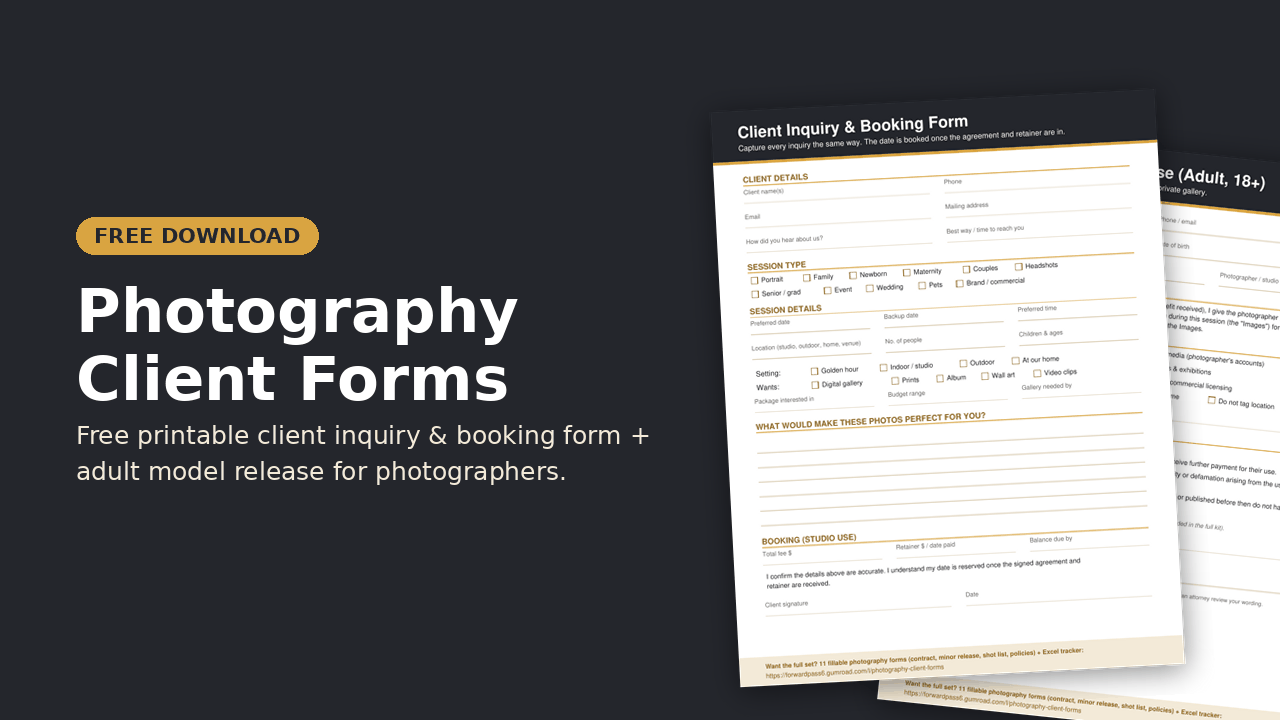
Free Photography Forms
A printable client inquiry and booking form plus an adult model release.
Download free →1. Work out your target hourly rate
Add up what the business costs each year: the pay you want, camera bodies and lenses (spread over their useful life), computer and editing software, gallery hosting, backup storage, insurance, website, marketing, travel, card fees and money set aside for taxes. Then estimate how many hours you can actually work on client sessions each year. Divide yearly costs by working hours and you have the rate every session needs to clear.
2. Count the real hours per session
List every step for a typical session and time it honestly:
- Before: inquiry emails, booking, planning questionnaire, location scouting, gear prep
- Session: travel both ways, set-up and the shoot itself
- After: import and backup, culling, editing, gallery upload, delivery and follow-up
Many photographers find a one-hour portrait session takes several hours in total. Multiply the total hours by your target rate to get the minimum fee for that session type.
3. Choose a pricing model
- Session fee plus products: a fee for your time, with images, prints and albums sold separately. Works well with in-person sales.
- All-inclusive packages: a set price that includes a number of edited images. Simple for clients to compare.
- Mini sessions: short, back-to-back sessions at one location on one day, priced lower per session but efficient overall.
Whatever you choose, list exactly what is included: session length, number of people, outfit changes, number of edited images, gallery length and delivery time.
4. Build two or three packages
Offer a small number of clear options rather than a long menu. A common structure is a short session with fewer images, a standard session and a longer premium option with extra locations or prints. Price the middle option at your target and make the gap between tiers obvious, so clients can pick quickly.
5. Retainers, cancellations and reschedules
Take a retainer when the client books to secure the date, and state whether it is non-refundable, when the balance is due and how weather or illness reschedules work. For events and weddings, a payment schedule with set due dates keeps cash flow steady. A signed services agreement with these terms protects both sides.
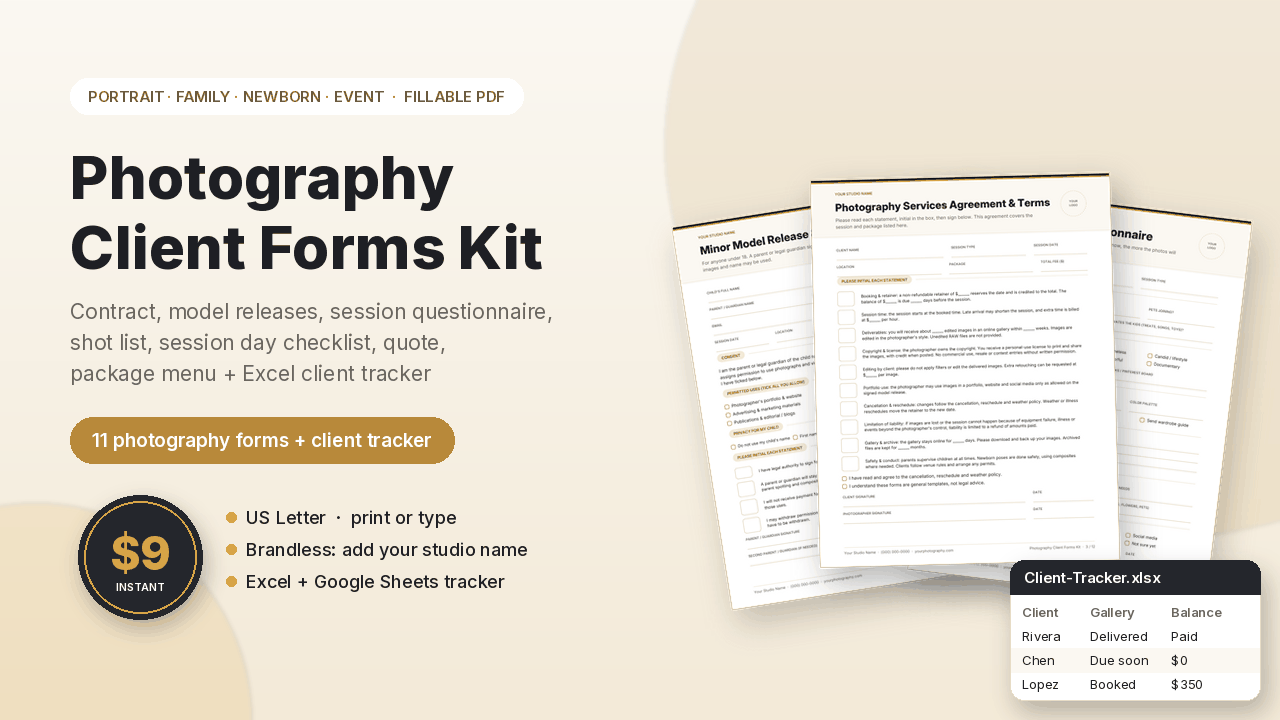
Photography Client Forms Kit
11 fillable and printable photography forms (inquiry & booking form, services agreement, session planning questionnaire, adult and minor model releases, shot list, session day checklist, quote and more) plus an Excel client tracker with retainers, balances, overdue flags and gallery due dates.
Get it →6. Add-on and extra fees
- Travel: a fee beyond a set distance from your base
- Extra images: a per-image or full-gallery upgrade price
- Rush delivery: for galleries needed sooner than your normal turnaround
- Extra people or pets: for larger groups or extended family
- Location or permit fees: passed on where a venue or park charges
- Prints and albums: priced at a markup that covers your ordering and handling time
7. Worked example
These are example numbers to show the method, not market rates for your area.
- Target rate: $60 per working hour
- Family session hours: 1 hour planning and email, 1 hour travel, 1 hour shoot, 3 hours culling and editing, 0.5 hours gallery and follow-up = 6.5 hours
- Minimum session fee: 6.5 x $60 = $390
- Package: 1-hour session with 25 edited images, delivered in an online gallery within two weeks, priced at $395
- Retainer: 30% at booking (about $119), balance due on the session day
- Add-ons: travel beyond 20 miles, extra images and rush delivery priced separately
Swap in your own costs, timings and local rates. The point is that every number comes from your time and target rate, not a guess.
8. Put it in writing
An inquiry and booking form, a session planning questionnaire, a signed services agreement and model releases keep sessions clear from first message to gallery delivery. Record the package, what is included, the retainer and balance, delivery time, copyright and usage terms and your cancellation policy. A short quote with line items avoids surprises on the final bill.
Common pricing mistakes
- Pricing only the time on site
- Forgetting gear replacement and software in your costs
- Unlimited images or edits with no cap
- No retainer, so last-minute cancellations cost you a booking
- Free travel to any location
- Copying a competitor price without checking your own numbers
- No written agreement on delivery time, copyright and usage
FAQ
How much should I charge for a photography session?
Work out the rate you need to cover your pay, gear, software, insurance and taxes, then multiply by the total hours a session really takes, including planning, travel and editing. Check local competitors so your price fits your market.
How many hours does a one-hour photo session take?
Usually several. Once you count emails, travel, the shoot, culling, editing and gallery delivery, a one-hour session often takes four to eight hours of work in total, depending on your editing style.
Should photographers charge a retainer?
Most do. A retainer paid at booking secures the date and covers your time if the client cancels late. State in your agreement whether it is refundable and how reschedules work.
Is it better to sell packages or a session fee plus products?
Packages are simple for clients to compare and buy online. A session fee plus products can earn more per client but takes more selling time. Many photographers start with packages.
How should I price mini sessions?
Price each mini session lower than a full session, but make sure the whole day, including set-up, booking admin and editing for every family, still clears your target rate.
Do I need a photography contract and model release?
It is strongly recommended. A signed agreement covers the package, payment, delivery, copyright and cancellations, and a model release covers how you may use the images, with parental consent for minors.
This page is general guidance, not legal, tax or business advice. Contract, copyright, sales tax and model release rules vary by location, especially for images of minors, so check the rules where you work.
Related templates
Free Photography Forms
A printable client inquiry and booking form plus an adult model release.
Download free →Photography Client Forms Kit
11 fillable photography forms (agreement, questionnaire, model releases, shot list, quote) plus an Excel client tracker.
Get it →