Holiday Hair Color Pricing: How Stylists Price Peak-Season Color, Toner Refreshes, Gloss Add-Ons, Gift Certificates and January Rebookings (Plus a Free Consent Form)
How hair stylists, colorists and salon owners can price late November through New Year’s Eve: fully booked Saturdays, long blonding appointments that block a whole afternoon, last-minute toner and gloss refreshes, color correction requests before a party, patch tests for new clients, deposits and no-show rules, gift certificates and January rebooking offers, with a worked example and a free hair color consent form.
Why colorists need a holiday price sheet
From the week before Thanksgiving to New Year’s Eve, the color chair is the most requested seat in the salon. Regulars want their roots done before family photos, lapsed clients suddenly remember you, and new clients arrive with a screenshot and a party date. Long blonding and balayage appointments that block three or four hours compete with quick toner and gloss refreshes that fit in a gap.
Priced like a quiet week in February, that season means turning away loyal clients, squeezing in color corrections nobody had time to plan, and losing whole afternoons to no-shows. A short written holiday price sheet, shared before booking opens, fixes most of that.
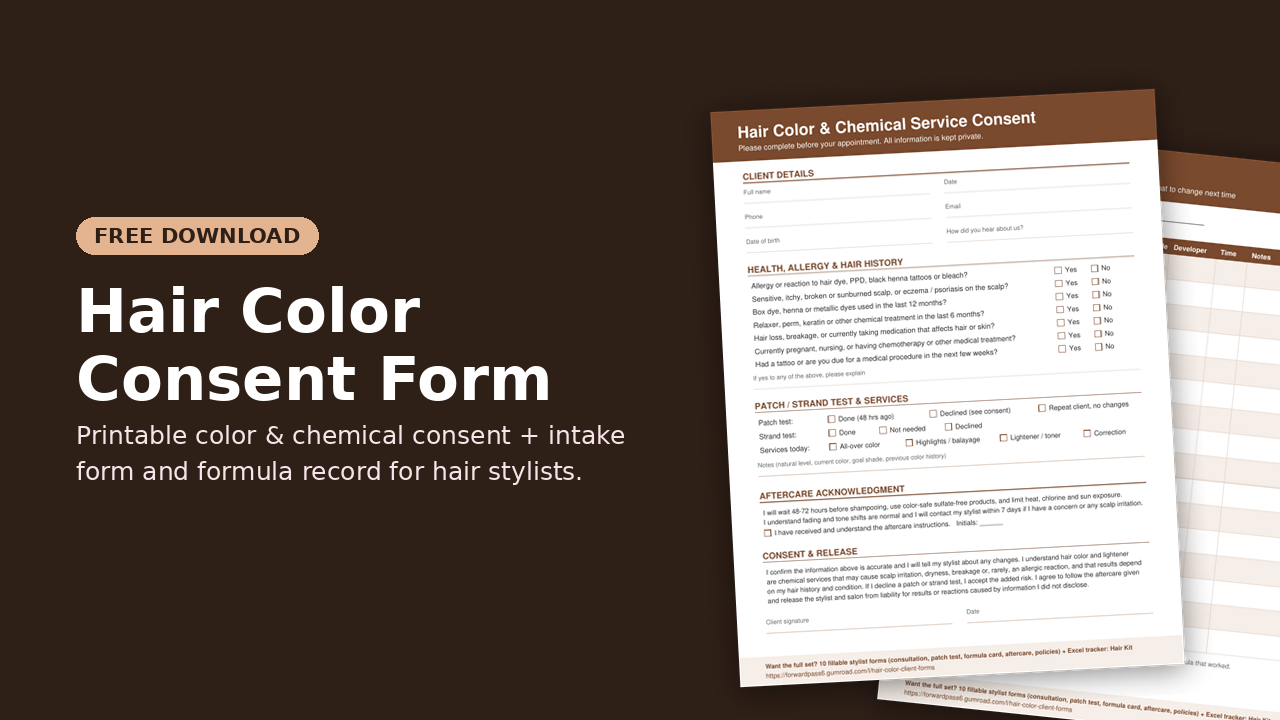
Free Hair Color Consent Form
A printable hair color and chemical service consent and intake form plus a client formula record for stylists, colorists and salons.
Download free →1. Start from your regular color menu
Keep your normal pricing as the base, whether you charge by service, by time, or by service plus product. If your menu is not written down yet, start with our hair color pricing guide, which covers root touch-ups, all-over color, highlights, balayage and corrections.
The holiday sheet adds only what changes this season: how you protect peak dates, what you require up front for long services, and the quick add-ons that clients want right before an event. Clients accept a clearly stated seasonal policy far more easily than prices that seem to jump at the register.
2. Protect peak dates and long services
Your chair hours are the limited resource, so price and book them on purpose:
- Name your peak window. For many stylists that is the Friday and Saturday before Thanksgiving, the three weeks before Christmas and December 29–31.
- Give regulars first access. Open holiday booking to existing clients a week or two before you announce it publicly. It rewards loyalty and fills the calendar early.
- Limit long services on peak days. Decide how many four-hour blonding or balayage appointments you take on a peak Saturday, and offer weekday slots for the rest.
- Set an after-hours rate. If you open early or stay late for a client’s event, state a flat fee or a percentage for appointments outside your normal hours.
Keep your regular pricing for clients who book early and choose off-peak days.
3. Deposits, no-shows and late arrivals
A missed four-hour color appointment in December is almost impossible to rebook. Many salons require a deposit for long or new-client color services during the holidays, applied to the final bill. Write down:
- which services need a deposit (for example, anything over two hours, color correction and all new-client color),
- how much it is (a flat amount or a percentage of the quoted service),
- your cancellation window (for example, 48 or 72 hours on peak dates) and whether the deposit can move to a new date once,
- your late-arrival rule: how late a client can be before the service is shortened, changed to a gloss, or rebooked.
Our salon deposit policy template and salon cancellation policy template give you wording you can copy and adapt.
4. A quick-refresh menu for last-minute clients
Most last-minute requests are not full color services. They are clients who want to look fresh for one evening. A short refresh menu turns those calls into bookable gaps instead of awkward no’s:
- Toner or gloss refresh with a blowout, for faded blondes and dull brunettes.
- Root touch-up express in a set time slot, no lightening.
- Face-frame brightening (a few foils around the face only).
- Gloss add-on priced as an extra on any cut or color service.
- Event styling add-on (blowout, curls or an updo) for clients heading straight to a party.
Give each refresh a fixed price and a fixed time so you can drop it into a 45–60 minute gap without reworking your day.
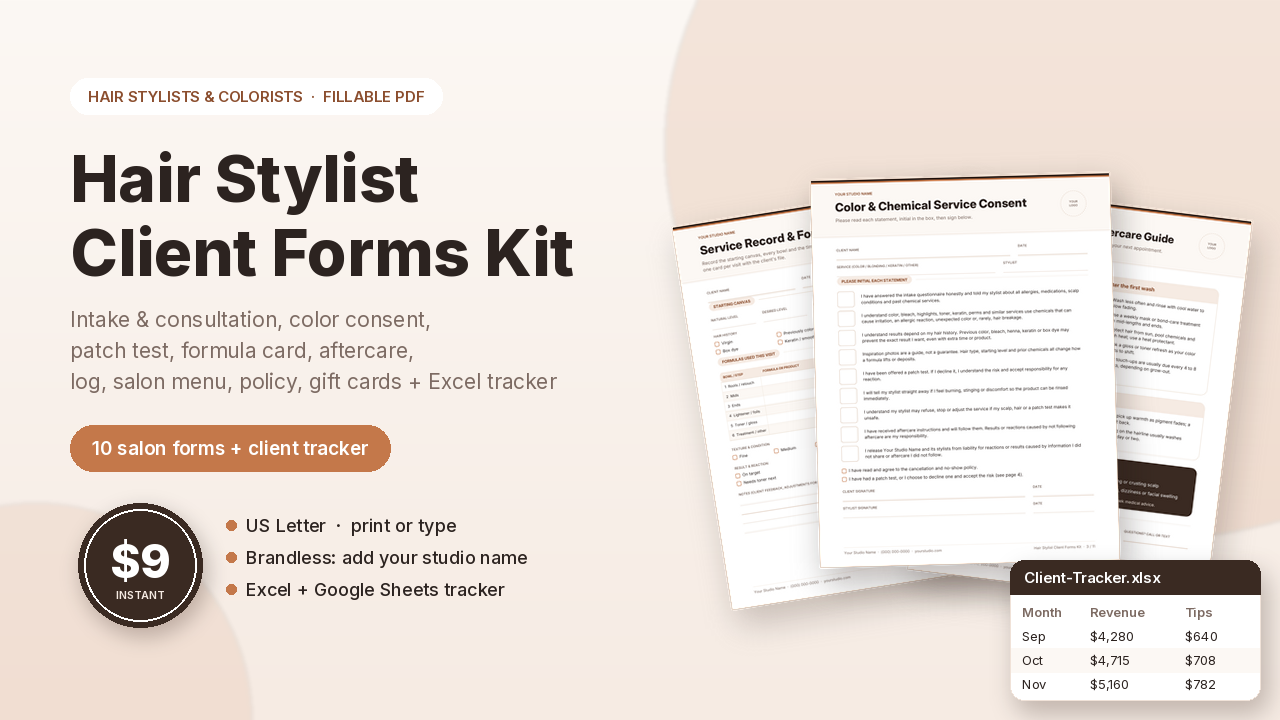
Hair Stylist Client Forms Kit
10 fillable forms (intake and hair consultation, color and chemical consent, patch test record, formula card, aftercare guide, appointment log, salon menu, policies, photo release and gift certificates) plus an Excel client tracker with next-visit due dates.
Get it →5. Color correction and big changes before an event
Every December brings the client who wants to go from box-dyed dark brown to icy blonde before a party on Saturday. Protect both the client’s hair and your reputation:
- Require a consultation for color corrections and big lightening changes, in person or by photo, before you quote.
- Quote corrections by the hour with a stated minimum, and explain that it may take more than one session.
- Put expectations in writing. Note the starting condition, previous color history, the realistic result for this visit and the plan for the next one.
- Know when to say not before the event. Offer a gloss or face-frame refresh now and the full change in January.
A signed color consent form records the hair history, the agreed plan and the client’s acknowledgement of the risks.
6. Patch tests and new clients
Holiday season brings many first-time color clients. Follow the color manufacturer’s instructions on allergy alert or patch testing, which often call for a test before the first service and again if a client’s history changes. Build that into booking: ask new color clients to come in for a quick patch test before their appointment, and note the date and result on their record card. Our hair color consent form guide explains what to record.
7. Gift certificates
Gift certificates sell themselves in December: partners and parents want to give a color service but do not know which one. Offer them for a fixed amount or a named service, and print the essentials on each one:
- the amount or service, and what happens if the chosen service costs more or less,
- whether a consultation and patch test are required before color,
- a certificate number you log when you sell and redeem it,
- expiry terms that follow your local gift card rules (many places restrict or prohibit expiry dates).
Encourage recipients to book a January date, when your calendar has room.
8. January rebooking offers
January is quieter for most colorists, and many holiday clients will need roots or a toner in six to eight weeks. Before each holiday client leaves, offer to book their next appointment in January or early February. Instead of discounting December, consider a small incentive for pre-booking a January weekday, such as a complimentary gloss or treatment add-on. Track next-visit dates so you can follow up with anyone who did not rebook.
Worked example (example numbers only)
Here is how one stylist might lay out a holiday sheet. The numbers are an example only; use your own menu and local market.
- Regular prices apply all season; peak window is Nov 20–26 and Dec 12–31.
- Peak Saturdays: no more than two blonding or balayage appointments; extra requests offered weekday slots.
- Deposit: $50 on any color service over two hours, all color corrections and all new-client color, applied to the final bill; 72-hour cancellation window on peak dates.
- After-hours appointments: +$40 flat.
- Refresh menu: toner or gloss with blowout $75 (60 min); root touch-up express $85 (75 min); face-frame brightening $95 (75 min); gloss add-on $30; event styling add-on $45.
- Color correction: consultation required; $90 per hour, 2-hour minimum.
- Gift certificates: any amount or a named service, logged by number.
- January offer: pre-book a January weekday color before leaving and get a complimentary gloss add-on.
Put it all in writing
Share the holiday sheet on your booking page and send it to regulars before booking opens. Have every color client complete an intake and consent form, keep their formula on a record card, and use a written policy for deposits and cancellations. Our salon client record card guide shows what to track from visit to visit.
FAQ
Do hair stylists charge more during the holidays?
Many keep their regular menu and add holiday rules instead: deposits for long or new-client color services, a limit on long appointments on peak Saturdays, an after-hours fee and a fixed-price refresh menu. Clients who book early on off-peak days pay normal prices.
Should I take color corrections in December?
Only with a consultation first. Quote corrections by the hour with a minimum, explain that it may take more than one session, and if the client’s event is close, offer a gloss or face-frame refresh now and the full correction in January.
How much deposit should a salon take for holiday color?
Many salons take a flat amount or a percentage of the quoted service for appointments over two hours, color corrections and new-client color, applied to the final bill. State the cancellation window and whether the deposit can move to a new date.
What is a toner or gloss refresh?
A short service that adds shine and corrects or refreshes tone between full color appointments, often paired with a blowout. Priced as a fixed service with a fixed time, it fits into small gaps in a busy holiday schedule.
Do new clients need a patch test before holiday color?
Follow the color manufacturer’s instructions, which often call for an allergy alert test before a first service. Ask new color clients to come in for the test before their appointment and record the date and result.
Can salon gift certificates expire?
It depends on where you work. Many places restrict or prohibit expiry dates on gift certificates, so check your local rules before printing terms, and log each certificate by number.
This page is general guidance, not legal, tax or financial advice. Deposit, cancellation and gift certificate rules, licensing and patch-test requirements vary by location. Always follow the color manufacturer’s instructions and have a professional review your salon policies.
Related templates
Free Hair Color Consent Form
A printable hair color and chemical service consent and intake form plus a client formula record for stylists, colorists and salons.
Download free →Hair Stylist Client Forms Kit
Fillable hair color and salon client forms plus an Excel client tracker with next-visit due dates.
Get it →