Spray Tan Aftercare Instructions: A Printable Client Handout for Spray Tan Artists
A practical guide to written spray tan aftercare for mobile tanners, salons and tanning studios: what clients should do before the appointment, how long to leave the solution on, how to take the first rinse, daily care that makes the tan last, what to avoid, reaction warning signs, rebooking wording and a one-page handout clients actually keep.
Why every spray tan client needs written aftercare
A spray tan is one of the few beauty services where most of the result happens after the client walks out the door. The solution keeps developing for hours, and what the client does that evening and over the next week decides whether the tan looks even and fades gradually or ends up streaky, patchy or gone in three days. Clients who shower too early, wear tight jeans home, work out the same night or scrub with a body exfoliant on day two will usually blame the solution or the artist, not themselves.
Verbal instructions given while the client is getting dressed are easy to forget. A printed aftercare sheet, plus the same text sent by message or email after the appointment, is what clients actually follow at home. It also protects your business. When your consent form says the client agrees to follow aftercare, and the client signs that they received the aftercare sheet, you have a clear record if a client later complains about streaks, transfer onto clothes or a fast fade. Written instructions also keep advice consistent when more than one artist works under your name, or when you work mobile events like bridal parties where several clients are tanned in one session.
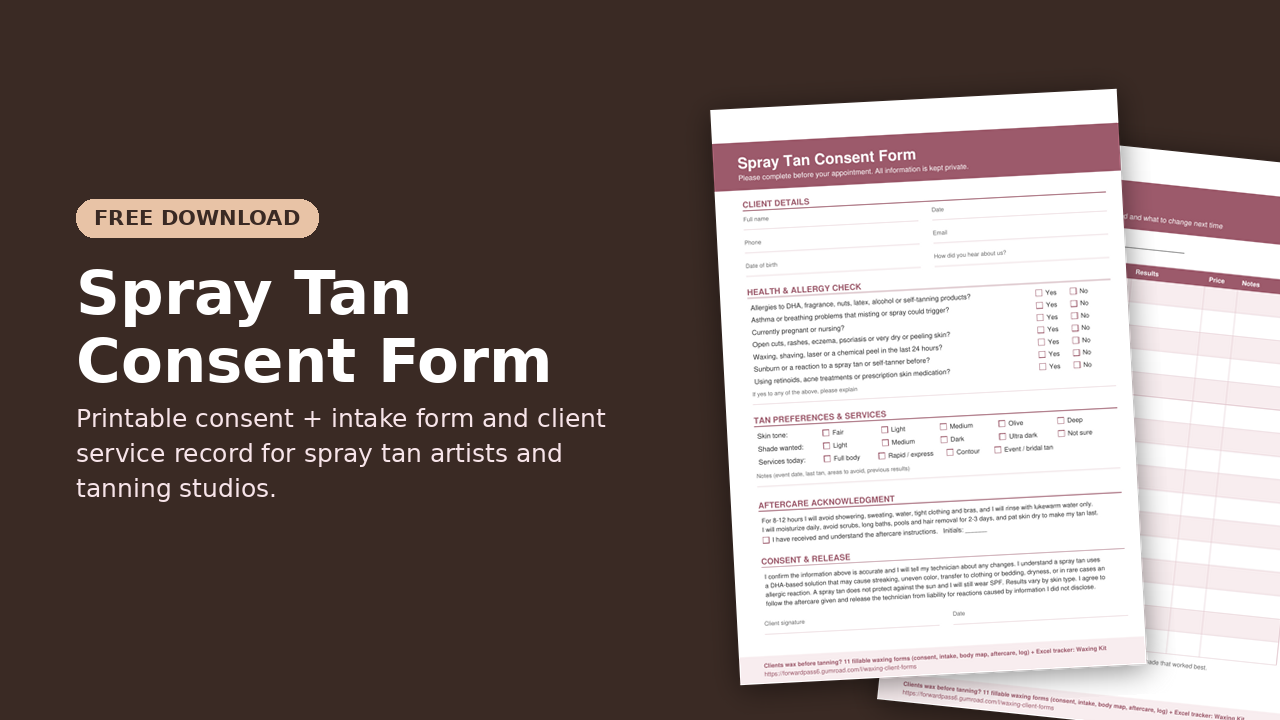
Free Spray Tan Consent Form
A printable spray tan consent and intake form plus a client service record.
Download free →What a spray tan aftercare sheet should cover
A good sheet is short enough to read in two minutes and specific enough that the client never has to text you with basic questions. Most spray tan aftercare handouts cover the same core sections:
- Before your appointment: exfoliating, shaving or waxing timing, and arriving with clean skin and no lotion, deodorant or makeup.
- What to wear: loose, dark clothing and open shoes for the trip home.
- Development time: how long to leave the solution on before the first rinse, written for the exact solution you used.
- The first rinse: lukewarm water only, no soap on the body, pat dry.
- Daily care: moisturizing, gentle cleansing and how to make the tan last.
- What to avoid: sweating, swimming, long baths, exfoliating and certain products, with time frames.
- Warning signs: what to do if the skin itches, burns or develops a rash.
- Rebooking: when to book the next tan for an event or a regular maintenance schedule.
- Your contact details and a line the client signs or initials to confirm they received the instructions.
Pre-tan prep belongs on the same handout or on a separate sheet sent when the booking is confirmed. Many tan problems start before the client arrives, so the best time to send the full sheet is at booking, then again right after the appointment.
Before the appointment: prep instructions to send at booking
Preparation decides how evenly the solution goes on and how evenly it fades. These are the instructions most spray tan artists send when a booking is confirmed. Adjust the timing to your own process.
- Exfoliate the day before. A gentle, oil-free scrub or exfoliating mitt on dry areas like knees, elbows, ankles and hands helps the tan develop evenly. Avoid oily scrubs that leave a film on the skin.
- Shave or wax ahead of time. Many artists ask for shaving at least the day before and waxing a day or more before, so pores have time to settle and the solution does not collect in them.
- Arrive with clean, bare skin. No body lotion, deodorant, perfume or makeup on the day, since these can act as a barrier and cause patchy or discolored areas.
- Finish other treatments first. Manicures, pedicures, facials and hair coloring are usually best done before the tan, not after.
- Bring loose, dark clothing. Loose pants or a dress, a loose top and slip-on shoes so nothing rubs the fresh solution.
- Plan the timing. For an event, many artists suggest tanning one to two days beforehand so the tan has developed and the first rinse is done.
Put this list in your booking confirmation template so it goes out automatically. It saves time on the day and cuts down on clients who arrive straight from the gym with lotion on.
Development time and the first rinse
Spray tan solutions develop over several hours after application. Rapid or express solutions let clients rinse sooner, but the color may keep deepening after the rinse. Because development time depends entirely on the product, your sheet should state the time for the exact solution you used, not a generic number. A small fill-in line works well: Your solution: ______. Rinse after: ____ hours.
| Solution type (example) | Example rinse window | What to tell the client |
|---|---|---|
| Standard solution | Example: 8 to 12 hours, often overnight | Sleep in loose, dark clothing and old sheets; rinse in the morning. |
| Rapid or express solution | Example: 1 to 4 hours, depending on depth wanted | Rinse at the time you chose; color keeps developing for several hours after. |
| Gradual top-up product | Per product label | Follow the label; usually applied at home between salon tans. |
The times above are example numbers for illustration only. Always use the development time recommended by your solution manufacturer.
How to take the first rinse: lukewarm water only, no soap, shower gel or scrub on the body. It is normal for brown water to run off; that is the cosmetic bronzer washing away, not the tan itself. Shampoo can be used on the hair if the client keeps it off the body. Pat the skin dry with a dark towel rather than rubbing. Apply a light, oil-free moisturizer once the skin is dry.
Until the first rinse: the first few hours
Streaks and patches can easily form before the first rinse, when the solution is still sitting on the skin. Your sheet should be very direct about this window:
- Wear loose, dark clothing and avoid bras, tight waistbands, socks and watches that press on the skin.
- Avoid water on the skin, including rain, washing up and splashing at the sink. Use a paper towel or tissue if hands need to be wiped.
- Avoid sweating: no workouts, hot rooms or heavy activity.
- Keep palms dry and avoid touching the face or wiping the hands, which can strip color unevenly.
- Sit on a towel or old sheet if the solution has a cosmetic bronzer that might transfer onto light furniture or bedding.
- Keep pets off laps and beds until after the first rinse.
Clients going home in winter weather should cover up loosely and avoid snow, rain or a wet car seat. A short line about weather is a simple addition that saves many complaints.
Daily care: how to make a spray tan last
A spray tan fades as the outer layer of skin naturally sheds. Clients cannot stop that process, but they can slow it down and help the tan fade evenly instead of in patches. Most artists give clients these daily care steps for the life of the tan:
| When | What to do | Why |
|---|---|---|
| Every day | Moisturize morning and night with a light, oil-free lotion | Hydrated skin sheds more slowly and evenly |
| In the shower | Short, lukewarm showers; pat dry | Hot water and long showers speed up fading |
| Cleansing | Gentle, sulfate-free body wash | Harsh cleansers can strip color |
| Shaving | Use a sharp razor and shaving gel; shave gently and not daily if possible | Shaving exfoliates the skin |
| Face | Oil-free skincare; go easy on acids and retinoids | Active ingredients can fade the face first |
| Toward the end | Exfoliate gently once the tan is patchy, before the next session | Removes leftover color for an even next tan |
How long a spray tan lasts varies by client, skin type, solution and lifestyle. Many artists describe a typical range of about five to ten days, but your sheet should avoid promising a number. A safer line is: How long your tan lasts depends on your skin and how closely you follow these steps.
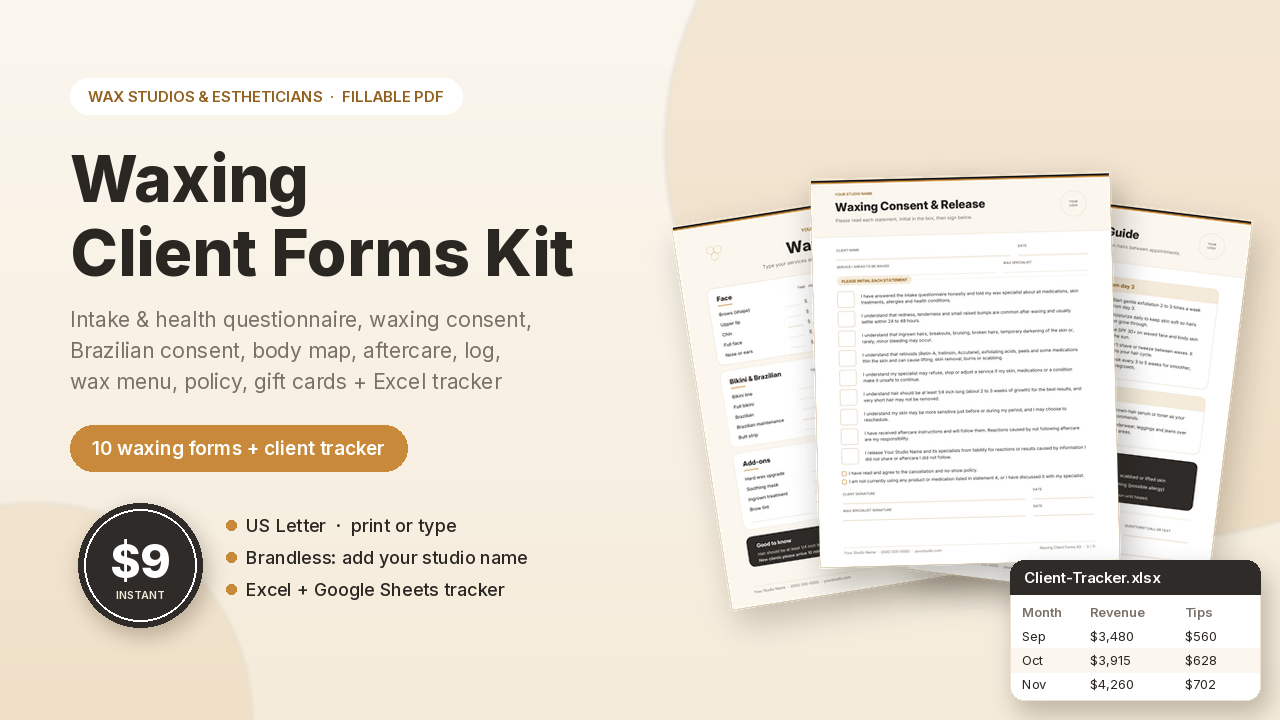
Waxing Client Forms Kit
11 fillable waxing forms (consent, Brazilian add-on, body map, aftercare, appointment log) plus an Excel client tracker. Useful for studios that offer waxing alongside spray tans and want matching consent and aftercare paperwork.
Get it →What clients should avoid, and for how long
Give clients concrete time frames instead of vague advice like “avoid water for a while.” Clear numbers are easier to follow and easier to point to later. The time frames below are example numbers only; set your own based on your solution and process.
| Avoid | Example time frame | Reason |
|---|---|---|
| Showering or getting wet | Until the rinse time on your sheet | Water before development causes spots and streaks |
| Exercise and heavy sweating | Until after the first rinse; lighter workouts after | Sweat causes streaks and drip marks |
| Tight clothing, bras, socks, shoes | Until after the first rinse | Pressure and friction rub off solution |
| Swimming pools and hot tubs | Example: first 2 to 3 days, and limit after | Chlorine and soaking fade the tan quickly |
| Long baths, saunas, steam rooms | Example: first few days | Heat and soaking lift color |
| Body scrubs, exfoliating mitts, peels | Until you are ready to remove the tan | Exfoliation removes the tanned skin layer |
| Oil-based products and some hair removal creams | For the life of the tan | Oils and depilatories can break down the color |
| Waxing | For the life of the tan, or book it before your tan | Waxing removes a layer of skin and color with it |
Also remind clients that a sunless tan does not protect the skin from the sun. They still need sunscreen outdoors. Many artists also ask clients to avoid applying sunscreen or moisturizer on the day of the appointment until after the first rinse.
Warning signs and reactions
Most spray tans are uneventful, but your sheet should tell clients what to do if something feels wrong. Keep this section factual and short. You are not diagnosing anything; you are telling the client when to stop, rinse and seek help.
- Itching, redness or a rash where the solution was applied: rinse the area with lukewarm water and stop using any tanning products. If symptoms continue or get worse, contact a doctor.
- Swelling, hives, trouble breathing or a reaction near the eyes or mouth: seek medical care right away.
- Stinging or watery eyes after the session: rinse with clean water and contact a doctor if irritation does not settle.
Ask clients to tell you about any reaction, and keep your own records: the solution brand, shade and batch or lot number used for each client. Many artists record this on the client service record. If a client reports a problem, you can tell their doctor exactly what product was used. Your consent form should already ask about allergies, skin conditions, pregnancy and previous reactions to sunless tanners; a patch test can be offered to clients who are unsure.
Rebooking and policy wording
Aftercare is also the natural place to set expectations about results and rebooking. Short, clear policy text prevents disputes about streaks, color and refunds. Here is example wording you can adapt; the numbers are examples for illustration only:
Example: Your tan will develop over the next several hours and look its best after your first rinse. If you notice an uneven area within 48 hours of your appointment, send a photo and we will advise you. Touch-ups for uneven development are offered at our discretion when aftercare instructions have been followed. Results vary by skin type, prep and aftercare, so we cannot offer refunds for fading, transfer onto clothing or results affected by not following these instructions.
For regular clients, add a simple rebooking line: To maintain your color, rebook every ___ weeks (example: 1 to 2 weeks). For events, include a line like: For weddings and events, book your tan 1 to 2 days before so it has fully developed (example). If you take deposits for bridal parties or mobile bookings, link the sheet to your deposit and cancellation policy so the client sees both together.
A one-page handout layout clients will actually keep
Most clients will glance at the sheet once and then look for it again when they have a question, so layout matters as much as content. A layout that works well for spray tan artists:
- Top: your business name, the client name, appointment date, solution and shade used, and the rinse time filled in by hand.
- Box 1, Before your next tan: exfoliate, shave or wax timing, no lotion or deodorant on the day.
- Box 2, Until your first rinse: loose dark clothing, no water, no sweating, dry palms.
- Box 3, Your first rinse: lukewarm water, no soap, pat dry, moisturize.
- Box 4, Make it last: moisturize twice daily, short showers, gentle cleanser, no scrubs or oils.
- Box 5, Warning signs: rinse and stop, contact a doctor if symptoms continue, seek care right away for swelling or trouble breathing.
- Bottom: rebooking line, your contact details, and a line for the client to sign or initial that they received these instructions.
Print it on one side of a letter-size page, hand it over at the end of every appointment and send the same content by text or email. Keep the signed copy, or a photo of it, with the client record.
Common spray tan aftercare mistakes
- Using generic rinse times. Development time varies by solution; always write the time for the product you used.
- Only giving aftercare after the tan. Prep instructions need to go out at booking, or clients arrive with lotion and fresh wax.
- No time frames. “Avoid swimming” is vague; “avoid swimming for the first 2 to 3 days” (example) is clear.
- Promising how long it will last. Results vary, so describe a typical range and explain what affects it instead.
- No reaction section. Clients need to know when to rinse, stop and see a doctor.
- No product record. Log the solution, shade and batch for every client.
- No signed receipt. Without it you have no record that instructions were given.
Pair your aftercare sheet with a clear consent form; the spray tan consent form guide covers what to screen for before the session, and the spray tan pricing guide covers how to price solo, mobile and party bookings.
FAQ
How long should you wait to shower after a spray tan?
It depends on the solution. Standard solutions are often left on for around 8 to 12 hours, while rapid solutions may allow a rinse after 1 to 4 hours. Always follow the rinse time your artist writes on your aftercare sheet for the product used.
How do you take the first shower after a spray tan?
Use lukewarm water only and no soap, shower gel or scrub on the body. Brown water running off is the cosmetic bronzer washing away, which is normal. Pat dry with a dark towel and apply a light, oil-free moisturizer.
How long does a spray tan last?
Results vary by skin type, solution and aftercare. Many artists describe a typical range of about five to ten days. Moisturizing daily, taking short lukewarm showers and avoiding scrubs, oils and long soaks help the tan fade evenly.
What should you avoid after a spray tan?
Until the first rinse, avoid water, sweating, tight clothing and touching the skin. Afterward, limit swimming, hot tubs, saunas and long baths, and avoid exfoliating scrubs, oil-based products and waxing for the life of the tan. A sunless tan does not protect against the sun, so sunscreen is still needed.
Should spray tan artists give written aftercare instructions?
Yes. A printed handout plus a digital copy is what clients actually follow, it keeps advice consistent across artists and events, and a signed receipt line gives the business a record if a client later complains about streaks or a fast fade.
What should a spray tan touch-up policy say?
State how soon the client should report uneven development, whether touch-ups are offered and on what conditions, that aftercare must have been followed, what is not refundable such as normal fading or transfer onto clothing, and that results vary by skin type, prep and aftercare.
This page is general guidance for spray tan artists, salons and tanning studios, not medical or legal advice. Development times, results and how long a tan lasts vary by solution, skin type and person. Always follow your solution manufacturer's instructions. Clients with signs of an allergic reaction or skin irritation should contact a doctor. Time frames, rebooking intervals and policy wording shown are example numbers for illustration only.
Related templates
Free Spray Tan Consent Form
A printable spray tan consent and intake form plus a client service record.
Download free →Waxing Client Forms Kit
Consent, Brazilian add-on, body map, aftercare sheet and appointment log, plus an Excel client tracker.
Get it →