Lash Extension Patch Test: How and When to Do One (With Record Form)
How to do an eyelash extension patch test, how long to wait, what a reaction looks like and how to record the result, with a printable patch test record.
What a lash patch test is
A patch test applies a few extensions with your usual adhesive, or a small dab of adhesive near the lash line, 24 to 48 hours before a first full set. It shows whether a client is likely to react to cyanoacrylate before you spend two hours on a full set. It won't rule out every future reaction, since sensitivity can develop over time, but it's a sensible first step and many insurers expect it.
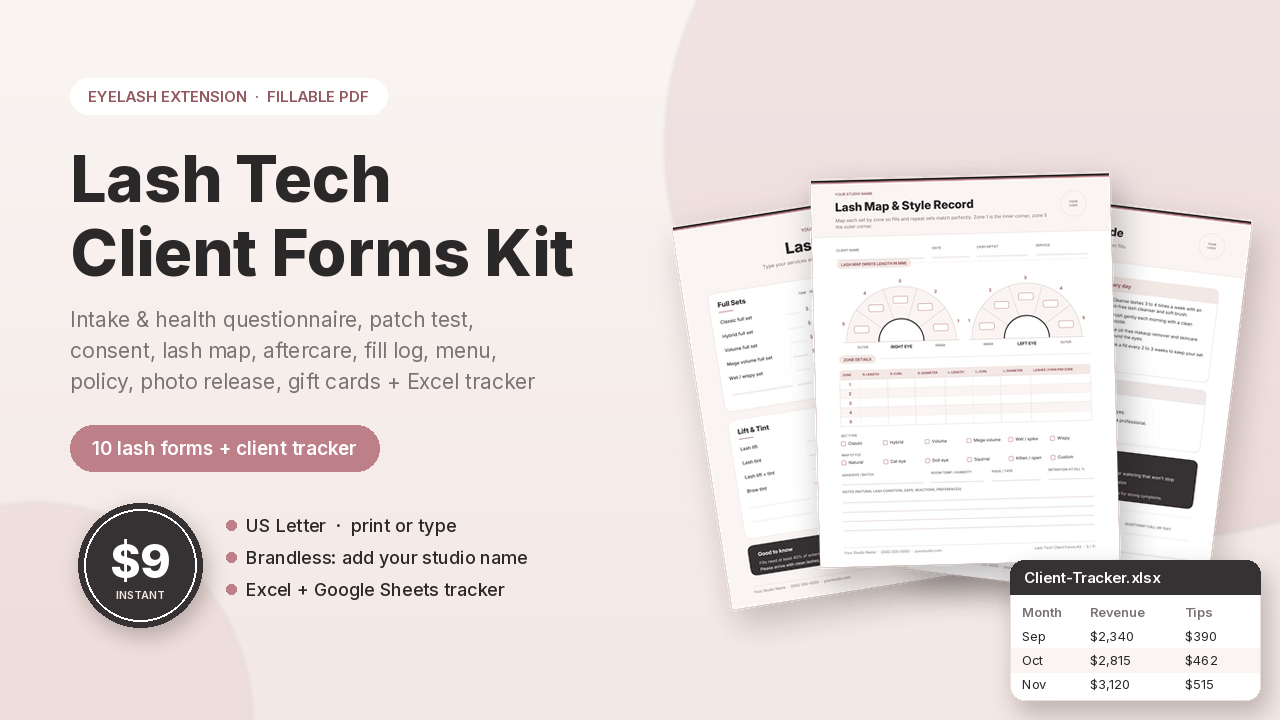
Lash Tech Client Forms Kit
An 11-page fillable PDF (intake, patch test record, consent and release, lash map, aftercare guide, refill log and more) plus an Excel client tracker.
Get it →Patch test, consent form and intake form: how they differ
| Record | Purpose | When | Who signs |
|---|---|---|---|
| Patch test record | Notes which adhesive (and batch) was tested, when, and whether any reaction was reported | 24-48 hours before a first full set, and again if you change adhesive brand | Artist records; client confirms the result |
| Consent form | Shows the client understood the service, its risks and the aftercare | Before the first set | Client |
| Client intake form | Contact details, allergies, eye history, lifestyle and lash goals | Before the patch test, updated when anything changes | Client |
The three work together: the client intake form flags sensitivities, the patch test checks the adhesive, and the lash extension consent form records agreement before the full set.
Step-by-step patch test procedure (with timing)
This is a general workflow many lash artists use. Follow your adhesive manufacturer's instructions, your insurer's requirements and your local licensing rules where they differ.
- At booking: tell new clients a patch test is needed and book it at least 24-48 hours before the full-set appointment. Send the intake form to fill in at home.
- Before you start (about 5 minutes): review the intake answers, check the eye area for any existing redness or irritation, and have the client sign your consent form. If the eyes are already irritated, reschedule rather than test.
- Apply (about 10-15 minutes): using the same adhesive you will use for the full set, apply a few extensions (often 3-5) to the outer corner of each eye. Note the adhesive brand, batch number and the room's temperature and humidity.
- Before the client leaves: explain what to watch for and how to contact you, and give basic aftercare (keep the area dry for the first day, no rubbing).
- Wait 24-48 hours: the client goes about their normal routine, including sleep and washing, so the test reflects everyday conditions.
- Check in: message the client before the full set to ask whether they noticed any itching, swelling, redness or watering. Record their answer and the date.
- Decide and record: if there was no reported reaction, confirm the full set; if there was, do not proceed (see below). File the record with the client's consent and intake forms.
A clear patch test does not guarantee a client will never react, because sensitivity can develop over time. Repeat the test if you switch adhesive brands or if a client returns after a long break.
Signs of a reaction
- Puffy or swollen eyelids
- Itching or burning along the lash line
- Redness that doesn't settle within a few hours
- Excess watering or irritation
If any of these appear, don't go ahead with the full set and suggest the client see a doctor if symptoms persist. Keep the patch test record with their consent form. This guide is general information, not medical advice.
What to do if a reaction appears
The following is general information, not medical advice. Lash artists cannot diagnose a reaction, so the safest approach is to stop and refer.
- Don't go ahead with the full set, and don't try a different adhesive on the same visit.
- Suggest the client see a doctor or pharmacist, especially if swelling, pain, discharge or changes in vision appear, or if symptoms don't settle. If symptoms are severe, they should seek urgent medical care.
- Offer removal of the test lashes with a suitable remover if the client wants it, and don't apply anything else to the area.
- Write it down: date, symptoms the client described, adhesive and batch, and the advice you gave.
- Follow up a few days later, and only rebook if a doctor is comfortable with it and the client wants to try again.
Use your lash extension aftercare instructions for clients who pass the test, so they know how to look after their full set.
Patch test record checklist (copy this)
- Client name and phone
- Date and time of patch test
- Artist name
- Adhesive brand, product name and batch / lot number
- Other products used (primer, remover, tape or pads)
- Number of test lashes and placement (e.g. outer corner, each eye)
- Room temperature and humidity
- Condition of eye area before test (any redness or irritation?)
- Check-in date and method (text, call, in person)
- Result: no reaction reported / reaction reported (describe)
- Action taken (full set confirmed, postponed, referred to doctor)
- Client signature or confirmation and date
Once the result is clear, confirm the full-set booking with one of these appointment reminder templates, and mention that clients should arrive without eye makeup.
FAQ
How long before a full set should I do a lash patch test?
Most artists do it 24 to 48 hours before the first full set, so there is time for a delayed reaction to show. Check your adhesive manufacturer's guidance and your insurer's requirements.
Do returning clients need another patch test?
Many artists repeat it when they switch adhesive brands, when a client returns after a long break, or when the client reports new allergies or sensitivities on their intake form.
Is a patch test the same as a consent form?
No. The patch test record notes what was tested and the result; the consent form records that the client understood and agreed to the service. Keep both in the client's file.
Can a client refuse a patch test?
Some do. If your policy allows it, ask them to sign a waiver stating they declined the test, and check that this is acceptable to your insurer before offering it.
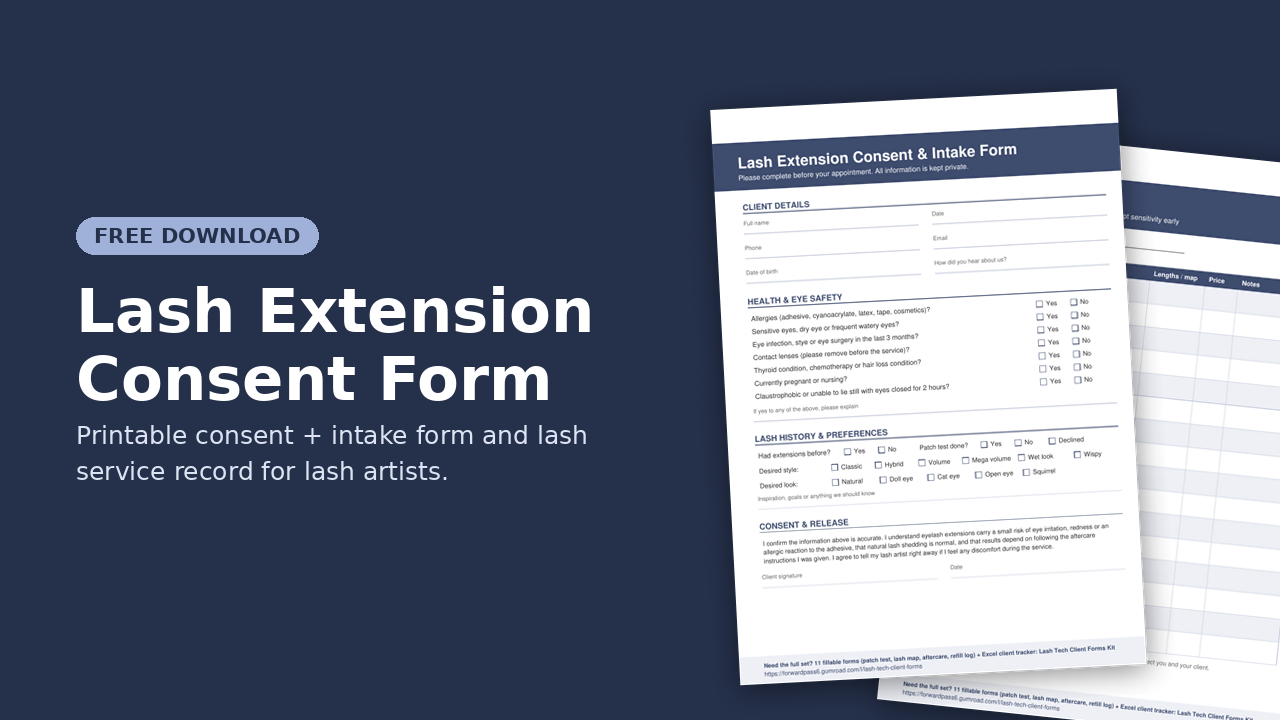
Free Lash Extension Consent Form
A printable eyelash extension consent and intake form plus a lash service record.
Download free →Related templates
Lash Tech Client Forms Kit
An 11-page fillable PDF (intake, patch test record, consent and release, lash map, aftercare guide, refill log and more) plus an Excel client tracker.
Get it →Free Lash Extension Consent Form
A printable eyelash extension consent and intake form plus a lash service record.
Download free →