Microblading Pricing: How Much to Charge (Plus Touch-Ups, Deposits & Holiday Rates)
A practical guide to setting microblading prices: your real cost per procedure, the initial session, the perfecting touch-up, annual color boosts, deposits and cancellations, consultations and patch tests, healing and aftercare notes, packages and the holiday and New Year rush, with a worked example and a free microblading consent form.
Why microblading pricing needs more thought than other brow services
Microblading is not a single appointment. A typical client journey includes a consultation, the initial session, a perfecting touch-up several weeks later, and color boosts in the years after. If you price only the first visit, you can end up doing hours of follow-up work for free. Add training costs, single-use blades, pigments, insurance and the time spent answering healing questions by message, and a price that looked generous can turn out to be thin.
This guide walks through your cost per procedure, how to price each stage, deposits, packages and the busy holiday and New Year period. Every number on this page is a clearly labeled example to show the math. It is not market data. Prices vary widely by city, experience, technique and local rules, so check what is normal near you and set your own rates.
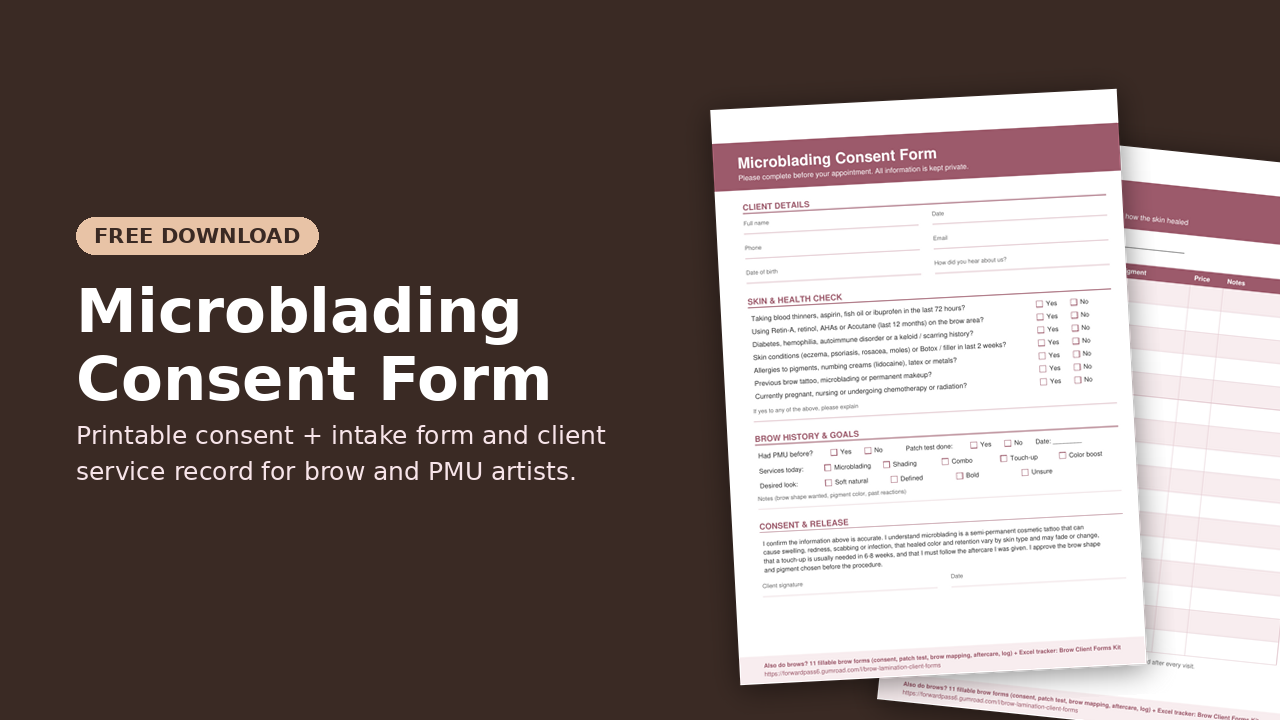
Free Microblading Consent Form
A printable microblading consent and intake form plus a client service record.
Download free →1. Start with your cost per procedure
Before choosing a price, add up what one full microblading client actually costs you. A simple cost list:
- Single-use tools. Blades or needles, handles if disposable, and anything else that is used once and thrown away.
- Pigment. The amount used per client times the price per bottle, plus waste.
- Disposables. Gloves, barrier film, mapping string, cotton, wipes, bed covers, masks.
- Aftercare kit. Any balm, wipes or printed instructions you send home.
- Card and booking fees. A percentage of the price, which grows with higher prices.
- Overheads. Studio rent or a share of it, insurance, sharps and waste disposal, software, licensing fees, marketing and ongoing training.
- Your time. Consultation, mapping, the procedure itself, the touch-up and follow-up messages.
Example only, not real supplier prices: blades and single-use tools $8, pigment $10, disposables $6, aftercare kit $5, card fees about $14 on a $450 service, and a share of rent, insurance, disposal and software $40. That is about $83 per client before paying yourself. If the whole journey (consultation, initial session and touch-up) takes about 4.5 hours and you want to earn $60 an hour, the floor is roughly $353. Anything below that means you are paying to work.
2. Pricing the initial session
The initial session is your anchor price. It usually covers brow mapping, shape and color selection, and the procedure itself, and many artists include the first perfecting touch-up in the same price.
Example range only; check your local market: an initial session at $350 to $600, including one perfecting touch-up within a set window. Newer artists still building a portfolio may sit at the lower end, while experienced artists with a long waitlist may charge more.
Whatever you choose, spell out exactly what the price includes: consultation, mapping, the session, one touch-up within a stated number of weeks, and what happens if the client misses that window.
3. The 6-8 week perfecting touch-up
Many artists schedule a perfecting session about 6 to 8 weeks after the first appointment, once the skin has settled, to fill in areas that healed lighter and refine the shape. Your own training and the client's skin will guide the exact timing.
- Included or separate. Most clients expect the first touch-up to be included. If you include it, say so clearly and set a deadline (for example within 10 weeks).
- Late touch-ups. If the client books after the window, charge a separate fee, because more work may be needed.
- Extra touch-ups. A second perfecting session is usually charged, since retention varies with skin type and aftercare.
Example only: first touch-up included if booked within 10 weeks; after that, or for a second touch-up, $150.
4. Annual color boosts
Microblading strokes fade over time, so many clients come back roughly once a year or so for a color boost. This is repeat income, and it is easy to forget when you set prices.
A tiered price based on time since the last visit keeps things fair: the longer the gap, the more work the brows usually need.
Example only: color boost $175 to $225 within 12 months, $250 to $300 at 12 to 24 months, and anything older treated as a new initial session after a consultation. If a client had their brows done elsewhere, assess them in a consultation first and price correction work separately.
5. Deposits and cancellation policy
Microblading slots are long, so a no-show can wipe out half a working day. A written deposit and cancellation policy protects your schedule.
- Take a deposit for every initial session and for peak-season bookings.
- State the notice needed to cancel or reschedule without losing the deposit (48 or 72 hours is common for long services).
- Explain what happens if the client cannot be treated on the day, for example because their consent form shows a reason to postpone, or they arrive with sunburn or irritation in the brow area.
- Say how many times a deposit can be moved to a new date before it is kept.
Example only: $100 deposit applied to the session price, 72-hour notice to reschedule, one free reschedule, and late cancellations or no-shows lose the deposit. Deposit and refund rules vary by location, so check your local rules before calling any payment non-refundable.
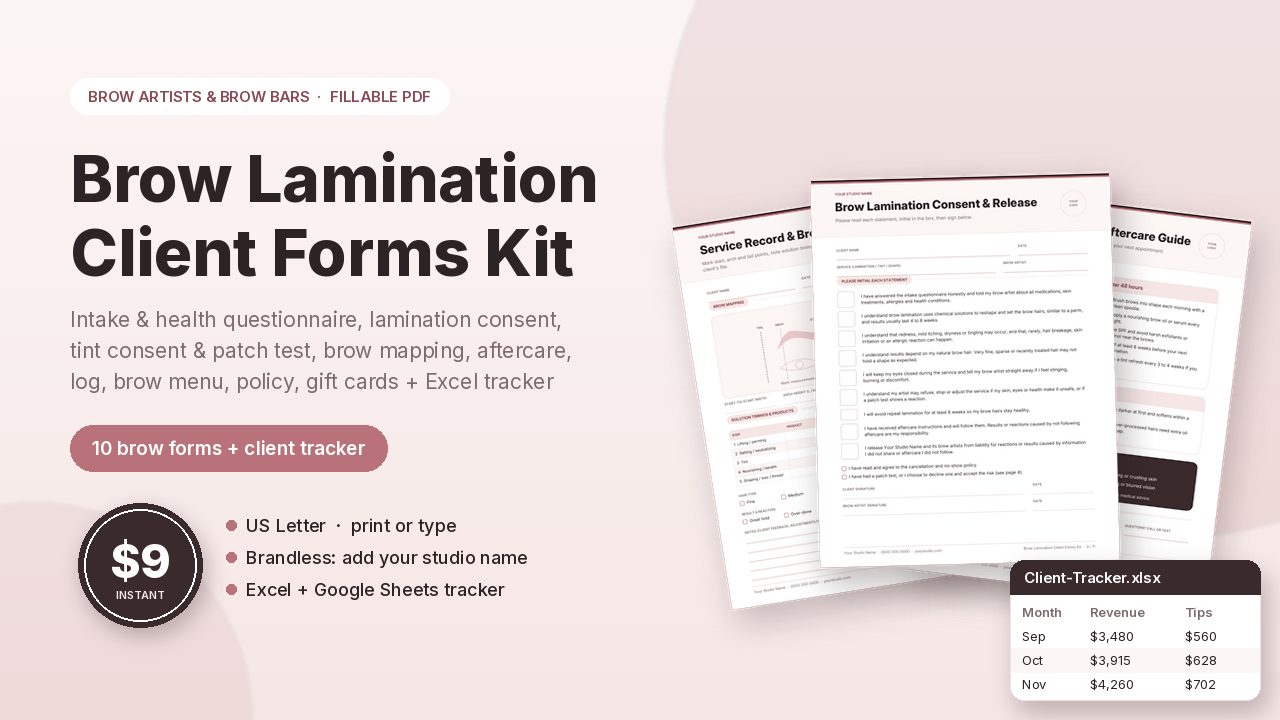
Brow Lamination Client Forms Kit
11 fillable brow lamination forms (consent, tint patch test, brow mapping, aftercare, log) plus an Excel client tracker.
Get it →6. Consultation and patch test
A consultation lets you check the client's skin, talk about expectations, explain healing and confirm that microblading is a good fit. Many artists offer it free with a booking, or charge a small fee that is credited to the session.
Every client should complete a microblading consent and intake form before the procedure. It records health history, medications, skin conditions, pigment allergies and agreement to your aftercare instructions. Offer a patch test where your training or local rules call for one, and record the result.
You can download a free form and see what to include in our microblading consent form guide. This is general guidance, not medical advice. Tell clients with medical concerns to check with their doctor before booking, and check your local licensing rules for permanent makeup.
Example only: a $25 consultation fee, credited to the session if the client books within 30 days.
7. Healing and aftercare notes
Retention, and therefore how much touch-up work you do, depends a lot on how clients follow aftercare. Clear notes save you time and protect your work:
- Before: send your pre-appointment instructions when the client books, based on your training and your consent form.
- Healing: explain in plain words that brows often look darker at first and may look patchy or lighter while they heal, which is why the perfecting session exists.
- After: give written aftercare that matches your training (for example keeping the area clean and dry, not picking, and avoiding sweating, swimming and sun for a set time).
- When to get help: tell clients to contact you with questions and to see a medical professional if they are worried about their skin.
Decide in advance whether poor aftercare affects your touch-up terms, and say so in writing.
8. Packages and add-ons
Packages make prices easier to compare and encourage clients to commit to the full journey.
- Full journey package. Consultation, initial session and perfecting touch-up in one price.
- Prepaid color boost. A small discount for booking and paying for next year's boost at the touch-up appointment.
- Combination brows. Strokes plus shading usually take longer and can be priced higher.
- Brow maintenance. Shaping or tinting between visits, if your training and local rules allow.
Example only: full journey package $450; combination brows $525; prepaid color boost $175 if booked within 12 months. Rules on prepaid services and gift cards vary by state, so check your local rules.
9. Holiday and New Year demand
Late November through January can be a busy time for brow artists. Some clients want brows done before holiday parties and family photos, others book as a New Year treat, and gift cards bought in December often turn into January bookings.
- Plan around healing. Brows need time to settle, so remind clients who want brows for a specific event to book well ahead, often several weeks before.
- Gift cards. Sell gift cards for the consultation or a set dollar amount rather than a fixed procedure, since not everyone will be suitable. Gift card and expiry rules vary by state.
- Protect peak slots. Take deposits for every December and early January booking and confirm the touch-up date at the first visit.
- Optional peak pricing. If you add a small surcharge for the busiest dates or after-hours slots, show it on your price list before clients book.
Example only: gift cards sold in $100 amounts, a $50 after-hours or Sunday surcharge in December, and New Year bookings opened in early November.
Worked example: one client from booking to color boost
Example numbers only; set your own prices for your market. A client buys a $100 gift card from her partner in December and books an initial session for January 8. The artist's full journey price is $450, including a perfecting touch-up within 10 weeks. The gift card covers the deposit, and the client pays the remaining $350 on the day. She returns for the touch-up on February 26, inside the window, at no extra charge.
Costs: about $83 for the initial session (from the cost example above) plus about $15 of supplies for the touch-up, so roughly $98. The artist spends about 4.5 hours in total and keeps around $352 before tax, about $78 an hour. At the touch-up she offers a prepaid color boost for next January at $175, and records the healed result, the pigment used and the next boost date on the client record.
Common microblading pricing mistakes
- Pricing from the cost of blades and pigment only and ignoring overheads, insurance and training
- Including unlimited touch-ups with no deadline
- No deposit for long sessions or peak holiday slots
- Selling gift cards for a specific procedure before a consultation
- Forgetting to price color boosts and correction work separately
- Skipping the consent form, patch test question or licensing check
- Copying a competitor's prices without knowing their costs or experience
FAQ
How much should I charge for microblading?
Work out your cost per procedure (single-use tools, pigment, disposables, aftercare, card fees and overheads) and the value of your time across the consultation, session and touch-up, then compare with local artists. As an example only, some artists price an initial session with one touch-up somewhere around $350 to $600, but your market may differ.
Should the 6-8 week touch-up be included in the price?
Many artists include the first perfecting touch-up in the initial price and set a deadline for booking it. Charge separately for late or extra touch-ups, and say so in writing.
How much should a microblading color boost cost?
A color boost is usually priced below the initial session, with tiers based on how long it has been since the last visit. Brows from another artist are often assessed in a consultation and priced as correction work.
How big should a microblading deposit be?
Choose an amount that covers your lost time if the client does not show, such as a flat fee or a percentage of the session, and apply it to the final price. Check your local rules before calling a deposit non-refundable.
Do microblading clients need a consent form and patch test?
A consent and intake form is strongly recommended for every client, and a patch test is sensible where your training or local rules call for one. See our microblading consent form guide for what to include.
Can I sell microblading gift cards for the holidays?
Yes, but it is safer to sell them for a dollar amount or a consultation rather than a fixed procedure, since not every recipient will be suitable. Gift card and expiry rules vary by state, so check your local rules.
This page is general guidance, not legal, tax or medical advice. All prices on this page are examples to show the math, not market data. Licensing for permanent makeup, deposit and refund rules, gift card and prepaid service rules, consumer rules and insurance requirements vary by state, county and city. Check your local rules and set prices that fit your own costs and market.
Related templates
Free Microblading Consent Form
A printable microblading consent and intake form plus a client service record.
Download free →Brow Lamination Client Forms Kit
11 fillable brow lamination forms (consent, tint patch test, brow mapping, aftercare, log) plus an Excel client tracker.
Get it →